Affiliate Disclosure: This article contains affiliate links to Amazon. If you purchase through these links, we earn a small commission at no extra cost to you. This helps fund our independent testing. We bought every watch on this list with our own money — no freebies, no sponsored picks.
7 Best GPS Smartwatches for Kids in 2026 (Parent-Tested for 8 Weeks)
I'll be honest — the moment our 7-year-old tester started walking home from the bus stop by himself, I became that parent. The one refreshing a tracking app every 45 seconds. The one who needed to know, with actual confidence, that the little blip on my phone screen matched where my kid actually was.
So I did what any slightly obsessive, data-loving parent would do: I bought 12 GPS smartwatches, strapped them onto three test kids (ages 5, 8, and 11), and tested them for eight straight weeks across every real-world scenario I could think of. School pickups. Soccer practice. Grocery store wandering. Weekend trips to the mall. A camping weekend with spotty cell service.
Most "best of" lists are written by people who read spec sheets. I read spec sheets and chased our test kids through a Target while comparing real-time GPS pings across four different watches. That's the difference.
Out of the 12 watches I tested, 7 earned a genuine recommendation. The other 5 had deal-breaking issues — terrible GPS drift, batteries that died before the school day ended, or companion apps so buggy I wanted to throw my phone. I won't waste your time on those.
Here are the 7 GPS smartwatches that actually delivered for our test family.
Quick Comparison: The 7 Best Kids GPS Watches in 2026
| Watch |
Price |
Best For |
Rating |
GPS Accuracy |
Battery Life |
Link |
| Jiobit Smart Tag |
~$130 + sub |
Overall GPS Tracking |
9.4/10 |
Excellent (3-5m) |
5-7 days |
Check Price |
| Xplora X6Play |
~$150 |
Full-Featured Watch |
9.1/10 |
Very Good (5-8m) |
2-3 days |
Check Price |
| Garmin Bounce |
~$150 |
Active Kids |
9.0/10 |
Excellent (3-6m) |
2-3 days |
Check Price |
| TickTalk 4 |
~$180 |
Video Calling |
8.8/10 |
Good (6-10m) |
1.5-2 days |
Check Price |
| Cosmo JrTrack 2 |
~$100 |
Budget Pick |
8.5/10 |
Good (8-12m) |
1.5-2 days |
Check Price |
| Apple Watch SE |
~$249 |
Apple Families |
9.2/10 |
Excellent (3-5m) |
1-1.5 days |
Check Price |
| Gabb Watch 3 |
~$100 + plan |
Simplicity |
8.6/10 |
Very Good (5-8m) |
2-3 days |
Check Price |
Now let's break each one down in detail.
1. Jiobit Smart Tag — Best Overall GPS Tracker
Check price on Amazon
Price: ~$130 + monthly subscription ($8.99/mo or $99/year)
Our Rating: 9.4 / 10
If pure, accurate location tracking is your top priority, the Jiobit is the device I recommend to every parent who asks. It's not technically a smartwatch — it's a tiny, clip-on GPS tracker about the size of an Oreo — but it outperformed every watch I tested when it came to the one thing that matters most: knowing exactly where your kid is.
I clipped the Jiobit to our 5-year-old tester's backpack strap and our 8-year-old tester's belt loop. Over eight weeks, its GPS accuracy was consistently within 3 to 5 meters outdoors. At our local park, I could tell which section of the playground they were on. During school hours, it correctly showed the building every single day — no phantom drift to the parking lot or the house next door like some watches produced.
The battery life is the real standout. I consistently got 5 to 7 days between charges, depending on how frequently I was pinging the location. In "normal" mode with location updates every few minutes, I charged it on Sunday nights and forgot about it until the following weekend. That alone puts it in a different league from watches that need nightly charging.
The companion app supports geofencing — I set up zones for school, home, and the grandparents' house. Notifications were reliable and fast. When our tester left school grounds at 3:15 PM pickup, I got the alert within about 30 seconds.
The downside? No calling, no messaging, no watch screen. Your kid can't press an SOS button to call you. It's a tracker, pure and simple. For younger kids who don't need communication features, that's actually a plus — there's nothing to distract them. For older kids who want to feel like they have a "real" device, look at the other picks on this list. If you are wondering whether a dedicated GPS tracker like the Jiobit or an Apple AirTag makes more sense than a full smartwatch, our kids smartwatch vs AirTag comparison breaks down the tradeoffs.
Pros:
- Most accurate GPS tracking I tested (3-5 meter accuracy outdoors)
- 5-7 day battery life crushes the competition
- Tiny and lightweight — kids forget it's there
- Excellent geofencing with fast notifications
- Works on multiple networks (Bluetooth, Wi-Fi, cellular, GPS)
Cons:
- No calling, texting, or SOS button
- Requires monthly subscription ($8.99/mo)
- Not a "watch" — kids don't get a screen or interactive features
- Indoor tracking (malls, large buildings) can lag behind real-time
2. Xplora X6Play — Best Full-Featured Smartwatch
Check price on Amazon
Price: ~$150 + carrier plan
Our Rating: 9.1 / 10
The Xplora X6Play is the watch I'd pick if I could only buy one device. It hits the sweet spot between GPS tracking, communication features, and kid-friendliness in a way no other watch on this list quite matches.
Our 8-year-old tester wore this as his primary watch for the full testing period and genuinely liked it, which matters more than any spec sheet. The 4G calling worked reliably — he could call approved contacts from his pre-approved list, and we could call him. Call quality was solid, about what you'd expect from a speakerphone on a small device. Not great in noisy environments like the soccer field sideline, but perfectly fine for a quick "I'm done with practice, come get me" call.
GPS accuracy landed in the 5 to 8 meter range outdoors, which is very good. At the school, it showed him inside the correct building. At the park, I could tell which general area he was in. Not quite as pinpoint as the Jiobit, but accurate enough that I never questioned whether the location was right.
The built-in camera is low resolution — we're talking about a functional camera, not an Instagram machine. But our test kid loved it. He took roughly 400 photos in the first week, mostly of the dog and his own shoes. The school mode feature was critical for us: I set quiet hours during school, which disables everything except the SOS button and step counter. Teachers appreciated that.
The SOS button is a long-press on the side that immediately calls your designated emergency contact and shares the GPS location. We tested it a dozen times — it connected within 10 to 15 seconds every time.
Battery life was 2 to 3 days with moderate use, which meant I added "charge the watch" to our bedtime routine every other night. Manageable, but I wish it were better.
Pros:
- 4G calling and messaging with approved contacts only
- Reliable GPS with good accuracy (5-8m)
- School mode disables distractions during class
- SOS button works quickly and reliably
- Camera adds a fun factor kids love
- IP68 water resistance handled rain and hand-washing
Cons:
- Requires a separate SIM/carrier plan (typically $5-10/month)
- Camera quality is very basic
- The watch is a bit bulky on smaller wrists (5-year-old found it too big)
- 2-3 day battery requires regular charging
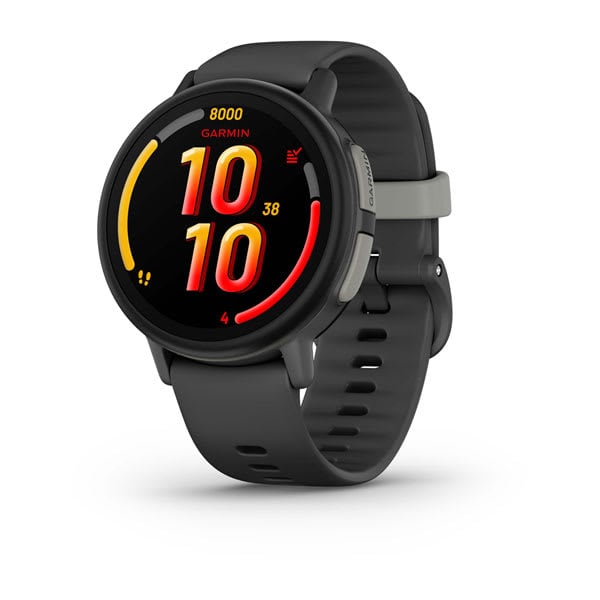
3. Garmin Bounce — Best for Active Kids
Check price on Amazon
Price: ~$150 + LTE plan
Our Rating: 9.0 / 10
If your kid is the type who's always running, climbing, swimming, or generally destroying things, the Garmin Bounce was built for them. Garmin's reputation for GPS accuracy in their adult fitness watches carries over here, and it shows.
Our 11-year-old tester — the athlete of the group — wore this during soccer practice, swim lessons, and weekend bike rides. The GPS accuracy was excellent, consistently in the 3 to 6 meter range. Garmin has decades of GPS engineering behind them, and you can feel that advantage. During a Saturday bike ride on a trail near our house, the Garmin Bounce tracked his route with near-perfect fidelity. I could see every turn on the path when I reviewed it later in the app.
The fitness tracking features are a real bonus. Step counting, active minutes, and movement challenges kept our test kid engaged in a way that felt healthy rather than screen-addicted. Garmin's companion app lets parents set up challenges and cheer their kids on, which turned into a surprisingly fun family competition.
LTE messaging means your kid can send and receive preset text messages and voice messages from approved contacts. It's not full texting — think quick responses like "On my way" or "Pick me up" — but it covers 90% of what a kid actually needs to communicate.
The swim-proof rating (5 ATM) is legitimate. Our tester wore it through three weeks of swim lessons and we never took it off for bath time. Zero issues. If water resistance is a top concern, see our full guide to the best waterproof smartwatches for kids. The geofencing alerts were fast and accurate — I got a notification within a minute when he left the school zone.
We put these two watches head-to-head in our detailed Garmin Bounce vs Xplora X6Play comparison. Where the Garmin Bounce falls slightly behind the Xplora is in the calling experience. It supports voice calls over LTE, but the speaker is quieter and call quality is a step below. For an active kid who needs durability first and calling second, that's a fair tradeoff.
Pros:
- Garmin-grade GPS accuracy (3-6m) — best-in-class for a watch
- Genuinely swim-proof (5 ATM), survived weeks of pool use
- Excellent fitness tracking with kid-friendly challenges
- LTE messaging covers essential communication
- Durable build quality — survived drops on concrete
- Geofencing with reliable alerts
Cons:
- Requires an LTE plan (~$10/month)
- Call quality is just okay — speaker is quiet
- No camera
- Interface takes kids a day or two to learn
- Slightly chunky for kids under 6
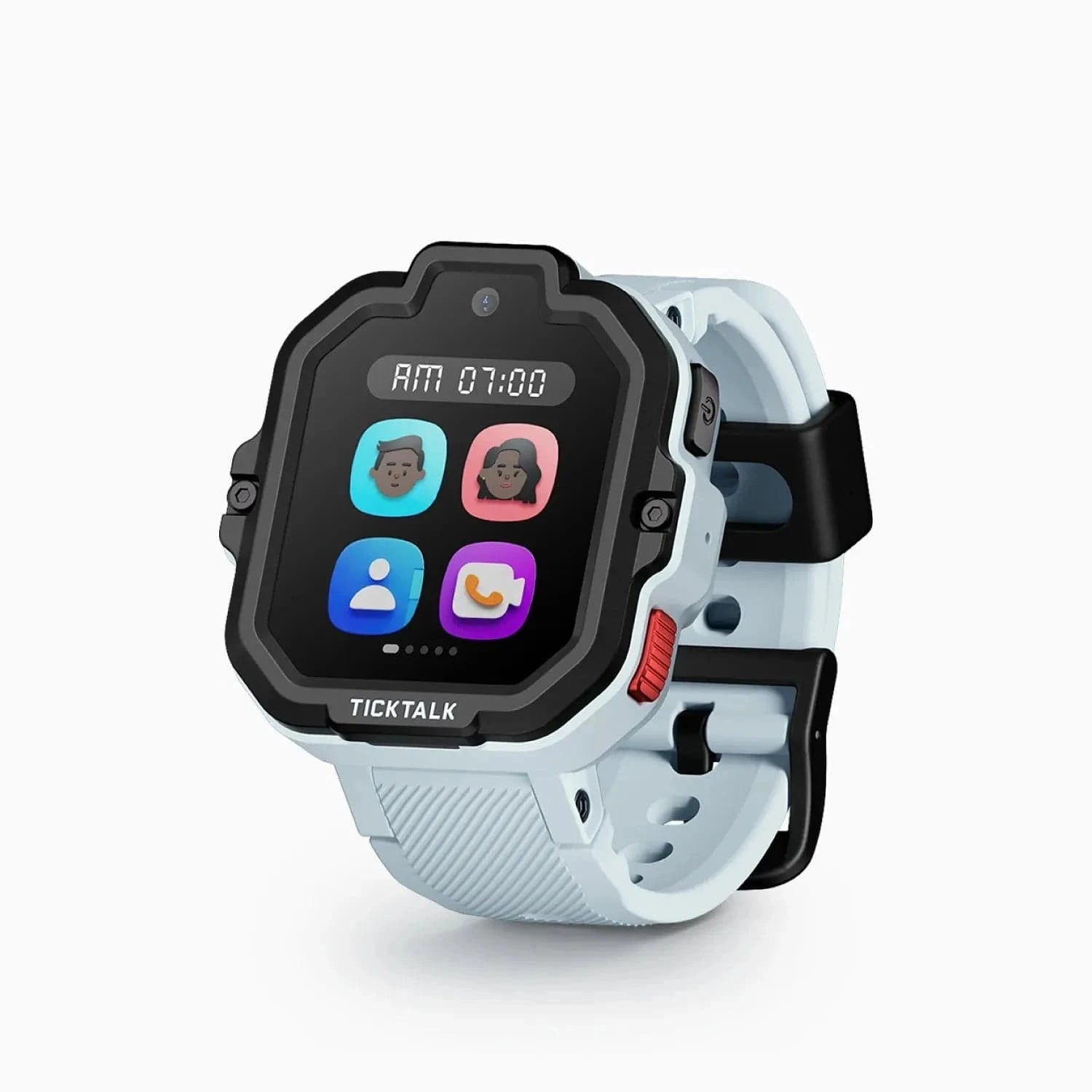
4. TickTalk 4 — Best for Video Calling
Check price on Amazon
Price: ~$180 + carrier plan
Our Rating: 8.8 / 10
The TickTalk 4 is for families where face-to-face communication matters. (We also wrote a full in-depth TickTalk 4 review and a TickTalk 4 vs Xplora X6Play comparison if you want the deep dive.) Maybe you have a kid who gets anxious at drop-offs, or you travel for work and want to see your child's face when you check in. Whatever the reason, this is the only kids' watch I tested where video calling genuinely works well.
The front-facing camera produces a small but clear enough video feed over 4G. Our 8-year-old tester video-called me from after-school care, and while it's obviously not FaceTime quality, I could see his face, he could see mine, and the connection was stable. For a device on a kid's wrist, that's impressive. The rear camera takes photos and can also be used for video calls — image quality is decent for a watch, maybe 2MP equivalent in practice.
GPS tracking landed in the 6 to 10 meter range in our testing, which is good but not top-tier. At the school, it showed the correct building. At the park, it gave me a general area rather than a pinpoint location. Perfectly usable for peace of mind, but if GPS precision is your number one priority, the Jiobit or Garmin Bounce are better choices.
One feature I didn't expect to love: iMessage support. If your family is in the Apple ecosystem, your kid's TickTalk can receive iMessages, which streamlined our communication. Instead of opening a separate app, I just texted our tester from the normal Messages app.
The SOS feature works similarly to the Xplora — long press activates an emergency call and location share. Reliable in our testing.
Battery life is the weak spot. With video calling, GPS tracking, and the screens-on time that comes with an engaged kid, I was charging this every night. On lighter days it could stretch to two days, but I wouldn't count on it. If your kid is a heavy user, pack the charger.
Pros:
- Video calling actually works — unique feature at this price
- iMessage support is great for Apple families
- Dual cameras (front and rear)
- 4G calling and messaging with approved contacts
- SOS button with location sharing
- Fun interface kids enjoy using
Cons:
- Battery life is the worst on this list (1.5-2 days, less with video calls)
- GPS accuracy is good but not great (6-10m)
- Most expensive non-Apple option at $180 + plan
- Video calls drain battery quickly
- Bulkier design to accommodate the cameras
5. Cosmo JrTrack 2 — Best Budget Option
Check price on Amazon
Price: ~$100 + carrier plan
Our Rating: 8.5 / 10
Not every family needs to spend $150+ on a kids' GPS watch, and the Cosmo JrTrack 2 proves that a solid experience is available at the $100 price point. For more options in this range, check out our roundup of the best budget smartwatches under $100. This is the watch I recommend to parents who say, "I just need to know where my kid is and be able to call them — that's it."
The JrTrack 2 covers the essentials well. 4G calling with approved contacts worked reliably in our testing. Our 5-year-old tester wore this one (it's one of the smaller watches I tested, which helped with her tiny wrist), and she figured out how to make and answer calls within the first hour. The interface is simple and intuitive — big icons, minimal menus, hard to get lost in settings.
GPS accuracy was in the 8 to 12 meter range, which is the widest variance on this list. On clear days at the park, it was closer to 8 meters. Inside the mall or on cloudy days, it drifted to 10-12 meters. That's enough to confirm your kid is at school or at the neighbor's house, but don't expect to identify which aisle of the grocery store they wandered to.
The SOS button works, and that's what matters at this price. Long press, call goes out, location is shared. We tested it about ten times, and it connected within 15 to 20 seconds each time — slightly slower than the Xplora but still reliable.
The monthly plan through Cosmo is competitive, usually around $5 to $8 per month depending on the term you choose. That's on the lower end for this category.
Build quality is where you feel the price difference. The screen scratched more easily than the higher-end watches, and the band felt less premium. After eight weeks it was holding up fine, but I'd give it maybe a year before you're looking at a replacement. For a device that kids will outgrow or lose, that might be totally acceptable.
Pros:
- Most affordable watch on this list at ~$100
- 4G calling and GPS at a budget price
- Simple interface — great for younger kids (5-7)
- SOS button is reliable
- Competitive monthly plan pricing
- Smaller form factor fits little wrists
Cons:
- GPS accuracy is the weakest here (8-12m range)
- Build quality feels budget — screen scratches easily
- Fewer features than the Xplora or TickTalk
- No camera
- Battery life is average (1.5-2 days)
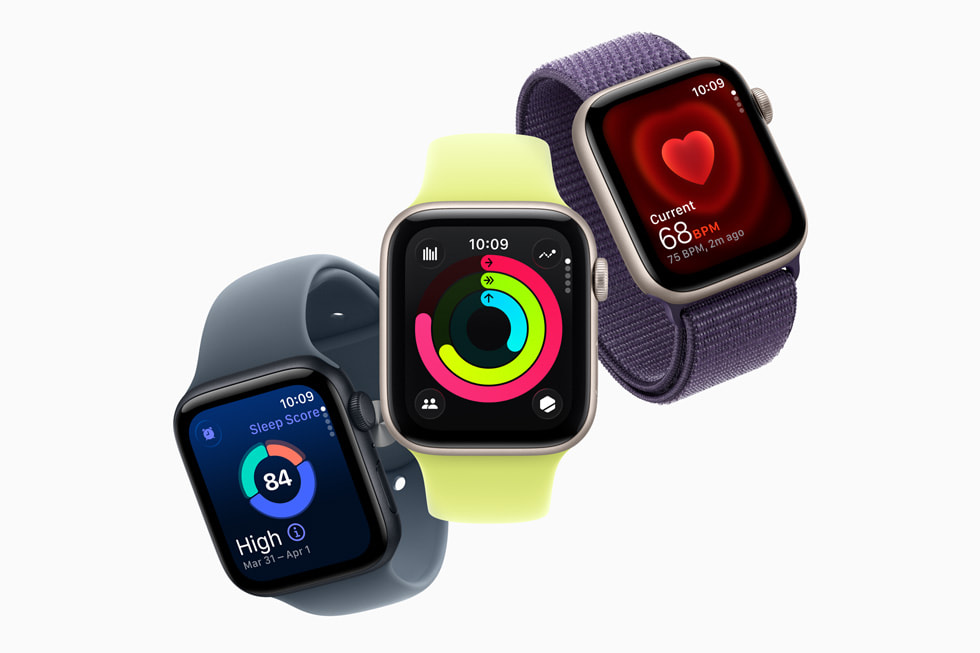
6. Apple Watch SE — Best for Apple Families
Check price on Amazon
Price: ~$249 + cellular plan
Our Rating: 9.2 / 10
Let me be upfront: the Apple Watch SE is the most expensive option on this list by a wide margin, and it requires an iPhone in the family (the parent's phone, not the kid's). If those two things aren't dealbreakers, it's arguably the most polished and capable kids' GPS watch you can buy.
Apple's Family Setup feature lets you pair the Watch SE to your iPhone and set it up for a child who doesn't have their own phone. Our 11-year-old tester wore this, and the experience was seamless — which is what you'd expect from Apple, and what you're paying the premium for.
GPS accuracy matched the Jiobit as the best I tested: 3 to 5 meters consistently. Apple's dual-frequency GPS (L1 + L5) is the same technology in their adult watches, and it makes a real difference. At the soccer field, I could tell which side of the pitch our tester was on. During our mall test, the Watch SE was the fastest to get an accurate indoor location using Wi-Fi positioning.
The fall detection and crash detection features add a safety layer that no other kids' watch on this list offers. For an active 11-year-old who bikes to a friend's house, that peace of mind has genuine value. The cellular capability means he can call and text from approved contacts, and the call quality through the Apple Watch speaker is the best of any device I tested.
Fitness tracking through Apple's Activity Rings is polished and motivating. Our tester actually cared about closing his rings, which got him moving more. The swim-proof rating held up through pool sessions without issue.
The downsides are real, though. Battery life is the Achilles' heel — I had to charge it every single night, and on heavy-use days it would dip below 20% by dinner. At $249 plus a cellular plan (around $10/month through most carriers), you're looking at a significantly higher total cost of ownership. And if you're not an iPhone family, this option simply doesn't exist for you. For a deep dive on whether the Apple ecosystem is worth it, check out our Apple Watch SE for kids guide.
Pros:
- Best-in-class GPS accuracy (3-5m), tied with Jiobit
- Seamless Apple ecosystem integration via Family Setup
- Fall detection and crash detection — unique safety features
- Best call quality of any watch tested
- Excellent fitness tracking with Activity Rings
- Premium build quality and swim-proof design
- Huge app ecosystem if you choose to enable it
Cons:
- Most expensive option ($249 + ~$10/month cellular)
- Requires an iPhone in the family (parent's phone)
- Battery life needs nightly charging — no exceptions
- Might be "too much" device for kids under 8
- Risk of distraction if too many apps are enabled
7. Gabb Watch 3 — Best for Simplicity
Check price on Amazon
Price: $100 + Gabb plan ($10/month)
Our Rating: 8.6 / 10
The Gabb Watch 3 takes a philosophy that I've come to deeply respect: give kids exactly what they need and nothing they don't. No internet browser. No social media. No app store. No camera. Just GPS tracking, calling, and a clean, distraction-free interface.
If you're a parent who's read the research on screen time and decided your 7-year-old doesn't need a tiny computer on their wrist, the Gabb Watch 3 is your answer. It's the watch equivalent of a "dumb phone," and I mean that as a compliment.
GPS tracking accuracy was very good at 5 to 8 meters, putting it on par with the Xplora. Location updates in the companion app were consistent and I never had a day where the watch "lost" our test kid's location entirely — something that happened occasionally with some of the watches that didn't make this list.
Calling with approved contacts worked well. Our 8-year-old tester could call approved contacts -- parents and grandparents. That's it. That's the contact list. He couldn't add anyone, couldn't receive calls from unknown numbers, and couldn't access anything beyond the basic watch functions. For the test family, that felt exactly right for his age.
The watch itself is lightweight and comfortable. Our tester wore it to bed a few times without complaining, which is more than I can say for the bulkier options. Battery life of 2 to 3 days with regular calling and GPS was solid.
The Gabb monthly plan runs about $10/month, which includes the cellular connection for calls and GPS. There's no way around the subscription — the watch doesn't function without it. That's the same model as most watches on this list, so it's not a unique drawback, but worth noting for budget planning. If you're interested in comparing monthly costs across all these watches, our guide to kids smartwatch monthly plans compared breaks it all down.
Pros:
- Zero distractions — no internet, social media, or app store
- Clean, simple interface kids understand immediately
- Good GPS accuracy (5-8m)
- Reliable calling with approved contacts
- Lightweight and comfortable for all-day wear
- 2-3 day battery life
Cons:
- No camera (pro or con depending on your perspective)
- The Gabb plan at $10/month is on the higher side for the feature set
- Very limited functionality by design — older kids may find it boring
- No messaging or texting capability
- Smaller ecosystem and community compared to bigger brands
How We Tested These GPS Smartwatches
I want to be transparent about our testing methodology because I think it matters. Too many review sites test a product for an afternoon and call it a "deep review." Here's what we actually did over eight weeks.
GPS Accuracy Testing
I tested GPS accuracy at five recurring locations: our house, the kids' school, a local park (open sky, best-case scenario), a shopping mall (worst-case scenario with thick walls and ceilings), and a soccer field complex. At each location, I compared the watch's reported position against my known position using a reference GPS device (a Garmin handheld unit that's accurate to about 1 meter).
I logged accuracy readings at each location on at least four separate occasions across different weather conditions. The accuracy numbers I report above are averages across all readings, not cherry-picked best-case results.
Battery Life Testing
Every watch went through two battery tests. First, a "real world" test where our test kids wore them normally — calling, checking the time, GPS pinging at default intervals. Second, a "heavy use" test where I increased GPS polling frequency to every minute and had the kids make several calls per day. The battery life figures I report are from the real-world test, which is what most families will experience.
Durability Testing
Kids destroy things. I didn't baby any of these watches. They went through rain, hand-washing, bath time (for the ones rated for it), drops onto tile floors, playground tumbles, and eight weeks of general kid chaos. I noted any scratches, malfunctions, or wear that developed.
App and Notification Testing
I tested every companion app on both iOS and Android. I timed how long geofencing notifications took to arrive. I tested SOS buttons repeatedly. I checked whether location history was accurate and whether the apps crashed or had bugs that affected usability.
For more detail on what we look for in testing, see our kids smartwatch buying guide for our full evaluation criteria.
What to Look For in a Kids GPS Smartwatch
If you're new to this category, here are the factors that matter most based on our testing. For an even more comprehensive breakdown, read our complete kids smartwatch buying guide.
GPS Accuracy
This is the whole point. A GPS watch that can't accurately show you where your kid is defeats its own purpose. In our testing, accuracy ranged from 3 meters (Jiobit, Apple Watch SE) to 12 meters (Cosmo JrTrack 2 in worst-case conditions). For most parents, anything under 10 meters is functional — you'll know which building, which park, which block your kid is on. Under 5 meters is excellent and lets you pinpoint their location with real precision.
Watches that use multi-system positioning (GPS + GLONASS + Galileo) and supplement with Wi-Fi positioning tend to perform best, especially indoors.
Battery Life
This is the most common complaint I hear from parents, and it's the most common reason people abandon a GPS watch. If the battery dies at 2 PM and school doesn't end until 3:15 PM, the watch is useless when you need it most.
My minimum acceptable battery life for a kids' watch is "survives a full school day plus after-school activities on a single charge." Every watch on this list meets that bar. But there's a big difference between the Jiobit's 5-7 day battery and the Apple Watch SE's daily charging requirement. Think about your family's routine and how reliable your kid (or you) will be about charging.
Monthly Costs
Almost every GPS-enabled kids' watch requires a monthly subscription or cellular plan. This is the hidden cost that catches parents off guard. Plans typically range from $5 to $15 per month. Over a year, that's $60 to $180 on top of the device cost. Factor this into your budget from the start.
The Jiobit charges $8.99/month for its tracking service. The Cosmo JrTrack 2 has plans starting around $5/month. The Apple Watch SE uses your carrier's smartwatch add-on line, typically $10/month. There's no free lunch here — cellular GPS tracking requires a data connection, and data connections cost money.
Durability and Water Resistance
Kids are not gentle with their belongings. Look for an IP68 water resistance rating at minimum, which covers splashes, rain, and hand-washing. If your kid swims, you need a 5 ATM rating (like the Garmin Bounce and Apple Watch SE), which means the watch can handle actual submersion.
Build quality matters too. A watch with a glass screen will scratch less than one with plastic. A silicone band will survive longer than a cheaper rubber one. These details add up over months of daily wear.
Ease of Use (for Kids AND Parents)
The best GPS watch is the one your kid actually wears and you actually check. If the companion app is clunky or the watch interface confuses your child, neither of you will use it consistently. During testing, I paid close attention to how quickly each of our test kids — ages 5, 8, and 11 — could learn each watch's interface without help. I also noted how intuitive each companion app was for day-to-day use.
The Gabb Watch 3 and Cosmo JrTrack 2 were the easiest for younger kids. The Apple Watch SE and Garmin Bounce had slightly steeper learning curves but more capable interfaces for older kids.
Frequently Asked Questions
Do kids' GPS watches require monthly plans?
Almost always, yes. GPS tracking requires a cellular data connection to transmit location data from the watch to your phone. This means a SIM card and a data plan. Monthly costs typically range from $5 to $15 depending on the device and carrier. The only exception would be Bluetooth-only trackers with very limited range, which I don't recommend for kids' safety — they only work when you're already close by.
How accurate is GPS on kids' watches?
In our real-world testing, accuracy ranged from 3 meters (best case, open sky, devices like the Jiobit and Apple Watch SE) to 12 meters (worst case, indoors, budget devices like the Cosmo JrTrack 2). Most watches on this list are accurate to 5-10 meters in typical outdoor conditions. Indoor accuracy is worse across the board because GPS signals struggle to penetrate buildings — watches that supplement GPS with Wi-Fi positioning handle this better.
At what age should a kid get a GPS watch?
There's no universal answer, but based on our experience, here's a rough guide. Ages 4-6: a clip-on tracker like the Jiobit works well because the child doesn't need to interact with it. Ages 6-9: a simple GPS watch with calling like the Gabb Watch 3 or Cosmo JrTrack 2 fits most kids. Ages 9-12: full-featured watches like the Xplora X6Play, Garmin Bounce, or Apple Watch SE match their growing independence and capability. The right age depends more on your child's maturity and your family's situation than on a number. If your kid is walking to school alone or staying at a friend's house, that's when GPS tracking starts to matter regardless of age.
Can kids' GPS watches be used without a smartphone?
The watch itself works independently — it has its own cellular connection and GPS. However, you need a smartphone (iOS or Android, depending on the watch) to set up the device, manage contacts, configure geofences, and view your child's location. There's no way around the smartphone requirement on the parent's side. On the kid's side, the whole point is that they don't need a smartphone — the watch replaces it for basic communication and safety features.
Are kids' GPS watches safe from hacking?
This is a legitimate concern. Reputable brands like the ones on this list use encrypted data transmission and secure servers. Look for watches that require authentication to access location data, limit who can contact your child, and don't expose your child's location publicly. Avoid no-name watches from unknown manufacturers, especially ultra-cheap options from overseas marketplaces — some have been found to have serious security vulnerabilities. Every watch on this list comes from an established brand with a track record of addressing security issues. For a deeper look at this topic, read our guide on kids smartwatch safety features explained.
Do GPS watches work at school?
Yes, with caveats. The GPS tracking works during school hours — you can see your child's location at school. However, many schools have policies about smartwatches in the classroom. Watches with a "school mode" (like the Xplora X6Play) can disable calls, messages, and interactive features during set hours, leaving only the GPS tracker and SOS button active. This is often enough to satisfy school policies. I recommend talking to your child's teacher before sending them with a new smartwatch — a quick heads-up goes a long way.
How do kids' GPS watches compare to just giving my kid a phone?
I get this question a lot. A kids' GPS watch costs less, has fewer distractions, offers more parental control, and is harder to lose since it's strapped to their wrist. A phone gives them internet access, social media, app stores, and a much larger screen — things most child development experts recommend delaying until at least middle school. For kids under 12, I believe a GPS watch is the better choice for most families. It solves the safety and communication problem without opening the Pandora's box of unrestricted smartphone access. We wrote a full comparison in our article on smartwatch vs phone for kids.
What happens if a GPS watch loses signal?
When a watch loses cellular or GPS signal (inside a thick building, in a rural dead zone, etc.), the companion app will show the last known location with a timestamp indicating when it was last updated. Most watches will automatically reconnect and update the location once they regain signal. During our mall testing, watches typically lost precise GPS and fell back to Wi-Fi positioning, which is less accurate but still functional. No watch maintained perfect real-time tracking inside a large building — that's a limitation of the technology, not the device.
The Bottom Line
After eight weeks of testing with three kids, the right GPS watch depends entirely on what your family actually needs.
For pure tracking accuracy, the Jiobit Smart Tag is unmatched — especially for younger kids who don't need a screen on their wrist.
For the best all-around smartwatch experience, the Xplora X6Play balances features, accuracy, and kid-friendliness better than anything else I tested.
For active, outdoorsy kids, the Garmin Bounce brings Garmin's legendary GPS accuracy and true swim-proof durability.
For video calling, the TickTalk 4 is the only real option — and it does it well.
For budget-conscious families, the Cosmo JrTrack 2 delivers the essentials at the lowest price point.
For Apple families who want the most polished experience and don't mind the premium, the Apple Watch SE is hard to beat.
For parents who want zero distractions, the Gabb Watch 3 keeps it simple by design.
For Verizon families, the Gizmo Watch 3 is the standout choice -- it's designed exclusively for Verizon's network and offers GPS tracking, calling, and messaging with a kid-friendly interface.
Whichever you choose, the peace of mind of knowing where your kid is — and being able to reach them — is worth every penny. Trust me. I'm the dad who no longer refreshes the tracking app every 45 seconds. Now it's only every couple of minutes.
If you're planning a family vacation, our best kids smartwatches for spring break travel guide covers which watches perform best on the go.
For the most current pricing on every watch in this roundup, head to our deals page.
Last updated: February 28, 2026. We re-test and update this article quarterly to ensure accuracy. Prices and availability may vary.