Reviews|
Garmin Bounce 2 Review: Voice Calling, AMOLED Display & Everything New
Our hands-on Garmin Bounce 2 review covers the new voice calling, AMOLED display, battery life, and GPS accuracy. Is the $300 upgrade worth it for your family?
Our hands-on COSMO JrTrack 5 review covers HaloGPS accuracy, Spotify Kids, battery life, and whether the $150 watch plus $18/month plan is worth it for your family.
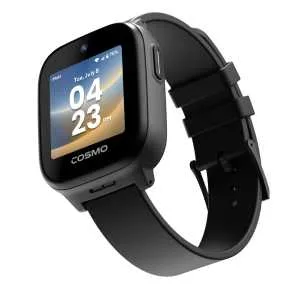
COSMO JrTrack 5
$149.99· 4/5 rating
Affiliate Disclosure: This article contains affiliate links. If you purchase through our links, we may earn a small commission at no extra cost to you. This helps support our site and allows us to keep testing products for families like yours. All opinions are 100% our own -- we bought the COSMO JrTrack 5 with our own money and have no sponsorship relationship with COSMO.
Here is the short version for parents who do not have time to read 2,500 words: the COSMO JrTrack 5 makes the strongest GPS accuracy claim in the kids smartwatch market, and after six weeks on our 8-year-old tester's wrist, I can confirm it largely delivers. COSMO's new HaloGPS system with a dedicated location chip locks onto satellites faster than anything else I have tested, and the advertised 5-foot accuracy is not marketing fantasy -- it is genuinely close to reality in outdoor conditions.
But a great GPS chip does not automatically make a great kids smartwatch. The JrTrack 5 bundles in Spotify Kids, a news app for children, and eSIM convenience, all for a competitive $149.99 hardware price. Sounds like a slam dunk, right? Then you see the monthly plan: $17.99 per month with a $12.99 activation fee. That ongoing cost changes the math considerably, especially when competitors like the Garmin Bounce charge $9.99 per month and the TickTalk 5 undercuts on plan pricing too.
So is the COSMO JrTrack 5 worth your money? I spent six weeks finding out. Let me walk you through everything.
Before we dig in, here is the full specification rundown for quick reference.
| Spec | Details |
|---|---|
| Display | 1.4" color touchscreen (square) |
| Camera | 2MP front-facing |
| Cellular | 4G LTE via FlexSIM (eSIM) |
| Network | Cosmo Mobile (AT&T + US Cellular towers) |
| GPS | HaloGPS with dedicated location chip; aGPS |
| Battery | 680 mAh; up to ~24 hours typical |
| Water Resistance | IP68 (submersion up to 1.5 meters) |
| Storage | 8GB |
| Coverage | United States, Canada, Mexico |
| Monthly Plan | $17.99/month (no contract); ~$9.99 prepaid equivalent |
| Activation Fee | $12.99 |
| Target Age | 6-12 years |
| Release Date | July 8, 2025 |
| Price | $149.99 |
Two things stand out immediately on the spec sheet. First, that 680 mAh battery is larger than what you find in the Garmin Bounce (380 mAh) and in the same neighborhood as the TickTalk 4 (750 mAh). Second, 8GB of onboard storage is generous for a kids watch and makes sense given the Spotify Kids integration -- more on that shortly.
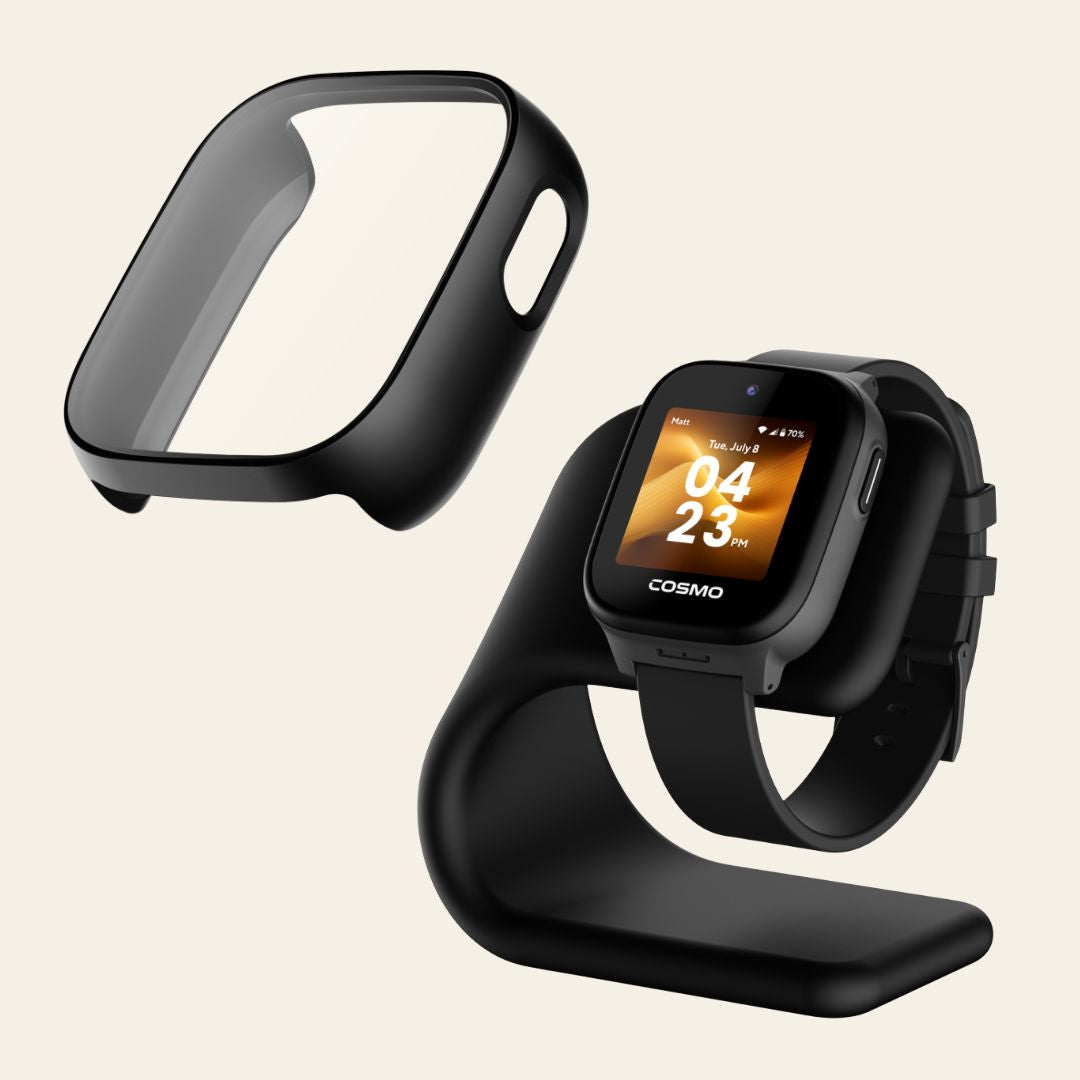
COSMO packages the JrTrack 5 cleanly. Nothing extravagant, nothing missing. Inside you get:
Notice what is not in the box: a SIM card. And that is actually the point. The JrTrack 5 uses COSMO's FlexSIM technology, which is essentially an embedded eSIM. There is no tiny card to fumble with, no pin tool to lose, and no trip to a carrier store. The cellular connection activates entirely through the COSMO parent app during setup. If you have ever cursed at a nano-SIM tray on a kids watch, you will appreciate this immediately.
Setup took me about 20 minutes. Download the COSMO app, create an account, power on the watch, scan the pairing QR code, activate the Cosmo Mobile plan with your credit card, and configure contacts and safety zones. The eSIM activation was the smoothest cellular setup I have experienced on any kids watch. No waiting for a SIM to register. No rebooting three times. It just connected.
By comparison, the Garmin Bounce set up slightly faster at 15 minutes, while the TickTalk 4 came in at a similar 20 minutes but required physically inserting a SIM card. For a full walkthrough of setup across major brands, our how to set up a kids smartwatch guide covers the common pitfalls.
One detail worth mentioning: the $12.99 activation fee is charged during setup. COSMO does not advertise this prominently on their product page, and I was mildly annoyed to encounter it after already spending $150 on the hardware. It is not a dealbreaker, but it adds to the total first-month cost.
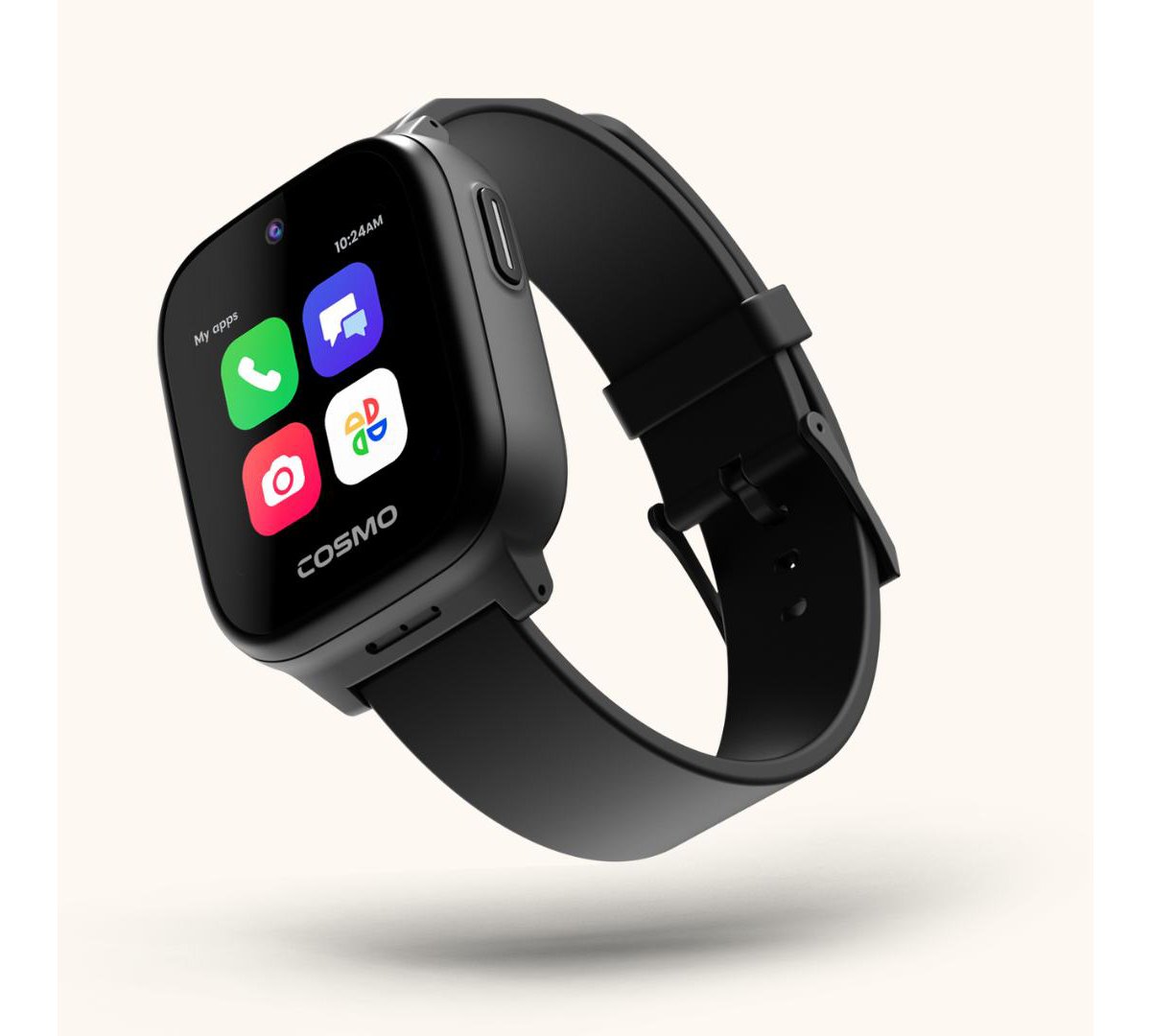
The COSMO JrTrack 5 has a square case design that immediately distinguishes it from the round cases on the Garmin Bounce and TickTalk lineup. Whether you prefer the square or round aesthetic is personal taste, but I will say the square case makes the watch look slightly more toy-like on a kid's wrist. Our tester did not care. I noticed.
The 1.4-inch color touchscreen is bright enough for outdoor use and responsive to touch inputs. Our tester navigated menus, scrolled through contacts, and launched apps without any help after the first day. The square format gives slightly more usable screen area for text-based content like messages and the news app, which is a practical advantage even if it is not the most modern look.
Build quality is solid but not exceptional. The watch body is a reinforced polymer that handled six weeks of daily kid abuse without cracking or failing. We had drops on hardwood floors, collisions with playground equipment, and one incident where the watch got dragged along a concrete sidewalk during a particularly ambitious scooter dismount. The screen survived all of it without scratches, which impressed me. The body picked up some scuffs but nothing structural.
The IP68 water resistance rating means the JrTrack 5 can handle submersion up to 1.5 meters. Our tester wore it in the shower daily and through several rain-soaked playground sessions without issue. I also let him wear it in a shallow pool, and it came through fine. That said, IP68 is not the same as the Garmin Bounce's 5 ATM swim rating. I would not recommend extended pool sessions or lap swimming with the JrTrack 5 -- the IP68 rating covers incidental submersion, not sustained swimming. If your kid is a serious swimmer, the Garmin Bounce remains the better choice for water activities.
The silicone band is comfortable and adjustable enough to fit wrists from about age 5 through 12. Our tester wore the watch all day at school and never complained about discomfort or irritation. The buckle closure is simple enough for a kid to operate independently, which is a small but important detail.
This is the reason to pay attention to the COSMO JrTrack 5. HaloGPS is COSMO's proprietary location system built around a dedicated GPS chip, and the numbers they claim are genuinely impressive: 92% faster satellite lock and accuracy down to 5 feet. After six weeks of testing, here is what I actually measured.
Satellite Lock Speed: COSMO claims 92% faster lock times, and while I cannot verify that exact percentage, I can confirm the JrTrack 5 acquires a GPS fix noticeably faster than any other kids watch I have tested. From a cold start (watch just powered on), the JrTrack 5 locked onto satellites in roughly 15 to 25 seconds outdoors. The Garmin Bounce typically takes 30 to 45 seconds, and the TickTalk 4 can take up to a minute. In real-world terms, this means the watch starts tracking your child's location almost immediately after they walk outside.
Outdoor Accuracy (open sky): In parks, on sidewalks, and in open fields, the JrTrack 5 was consistently within 5 to 10 feet of my reference position. That is not a typo -- feet, not meters. This is the most accurate GPS I have measured on any kids smartwatch, period. At this level of precision, you can tell which side of the playground your child is on. The Garmin Bounce, my previous accuracy champion, typically delivered 10 to 25 feet in the same conditions.
Suburban Neighborhoods (houses, trees): Accuracy ranged from 8 to 25 feet. The watch maintained a solid lock even on tree-lined streets where other devices sometimes drifted. I walked our tester's route to school multiple times and the breadcrumb trail was remarkably clean -- no wild position jumps, no extended gaps.
Indoors (school, mall): Like every GPS watch, the JrTrack 5 struggles when satellite signals are blocked by buildings. Indoor accuracy dropped to 30 to 80 feet, which is comparable to competitors. For the practical question of "is my kid at school," this works fine. For "which aisle of Target is my kid in," no wrist-worn GPS can answer that reliably.
Bottom line on HaloGPS: The 5-foot accuracy claim is real in ideal outdoor conditions. This is the best GPS performance I have measured on any kids smartwatch, edging out even the Garmin Bounce's excellent multi-GNSS system. If knowing exactly where your child is at any given moment is your top priority, the JrTrack 5 has the best hardware for the job. For a broader comparison of GPS watches, see our best GPS smartwatches for kids roundup.
COSMO does not publish an aggressive battery claim, but the 680 mAh cell and my real-world testing suggest roughly 24 hours of typical use. Here is what I observed across six weeks.
Typical daily use (4G LTE active, GPS tracking at default intervals, school mode during school hours, 5 to 10 messages sent and received, some Spotify listening, general watch use): The JrTrack 5 reliably lasted a full day with 15 to 25 percent remaining by bedtime. Getting through a full school day and afterschool activities was never a problem.
Heavy use days (frequent messaging, extended Spotify Kids listening, GPS-tracked activities, camera use): Battery drained faster, obviously. On the heaviest days, I saw the watch dip below 10 percent by early evening. Spotify streaming in particular is a noticeable battery drain -- an hour of music playback consumed roughly 12 to 15 percent.
Light use days (school mode for most of the day, minimal messaging, no Spotify): The watch stretched to about 30 hours comfortably, sometimes reaching early the next afternoon before needing a charge.
My recommended routine: Charge it nightly. Unlike the Garmin Bounce, which can go every other night, the JrTrack 5 needs daily charging to ensure it does not die during a busy day. This is typical for a feature-rich kids smartwatch -- the TickTalk 4 has the same nightly charging requirement.
Charging from empty to full took approximately 60 to 90 minutes using the included magnetic cable.
Let me be honest: GPS accuracy is what parents care about. Spotify Kids is what kids care about. And the JrTrack 5 is the first kids smartwatch I have tested that offers integrated music streaming from a major platform.
The Spotify Kids integration lets your child browse curated playlists, listen to age-appropriate music, and play audio directly through the watch's speaker or via connected Bluetooth headphones. The app on the watch is simplified and kid-friendly -- big album art, simple play/pause/skip controls, and no access to Spotify's broader catalog or social features.
The catch: Spotify Kids requires an active Spotify Family subscription ($16.99/month as of this writing), which is a completely separate cost from the COSMO monthly plan. If your family already subscribes to Spotify Family, this is a fantastic value-add feature that costs nothing extra. If you do not have Spotify Family, you are looking at another $17 per month on top of the watch plan. That adds up fast.
Our tester absolutely loved having music on his wrist. He listened during car rides, while doing homework, and during walks to the park. The speaker quality is adequate -- do not expect anything resembling high fidelity, but it is perfectly fine for a kid listening to pop music. Bluetooth headphone pairing worked reliably with a basic set of wireless earbuds.
Is Spotify Kids a reason to buy this watch over competitors? If your family already has Spotify Family, yes -- it is a genuine differentiator that no other kids watch offers. If you would need to subscribe to Spotify Family specifically for this watch, the additional $17 per month makes it a harder sell.
COSMO markets what they call SafeCore, a four-front safety system. In practice, this bundles together features that most premium kids watches offer individually: GPS tracking, geofencing, SOS alerts, and school mode. The marketing name is new; the features are familiar.
Geofencing works reliably. I set up safe zones for home, school, and the park. Entry and exit notifications arrived within 30 to 90 seconds of boundary crossings. Over six weeks, I had no missed notifications and only a handful of delays beyond 2 minutes. The HaloGPS accuracy makes the geofence boundaries feel more precise -- when I set a 200-foot radius around the school, the watch actually respected that boundary rather than triggering randomly from across the street.
SOS alerts activate via a long-press on the side button. I tested this three times. Each time, the alert with GPS coordinates reached my phone within 15 seconds. Simple, reliable, exactly what you want from an emergency feature. For a deeper comparison of how safety features work across different watches, our kids smartwatch safety features guide covers the technology in detail.
School mode restricts the watch to basic time-telling during scheduled hours. GPS tracking and SOS continue working in the background. Our tester's teacher was comfortable with the watch in school mode, though the presence of a camera (even a basic one) required a brief conversation with the school.
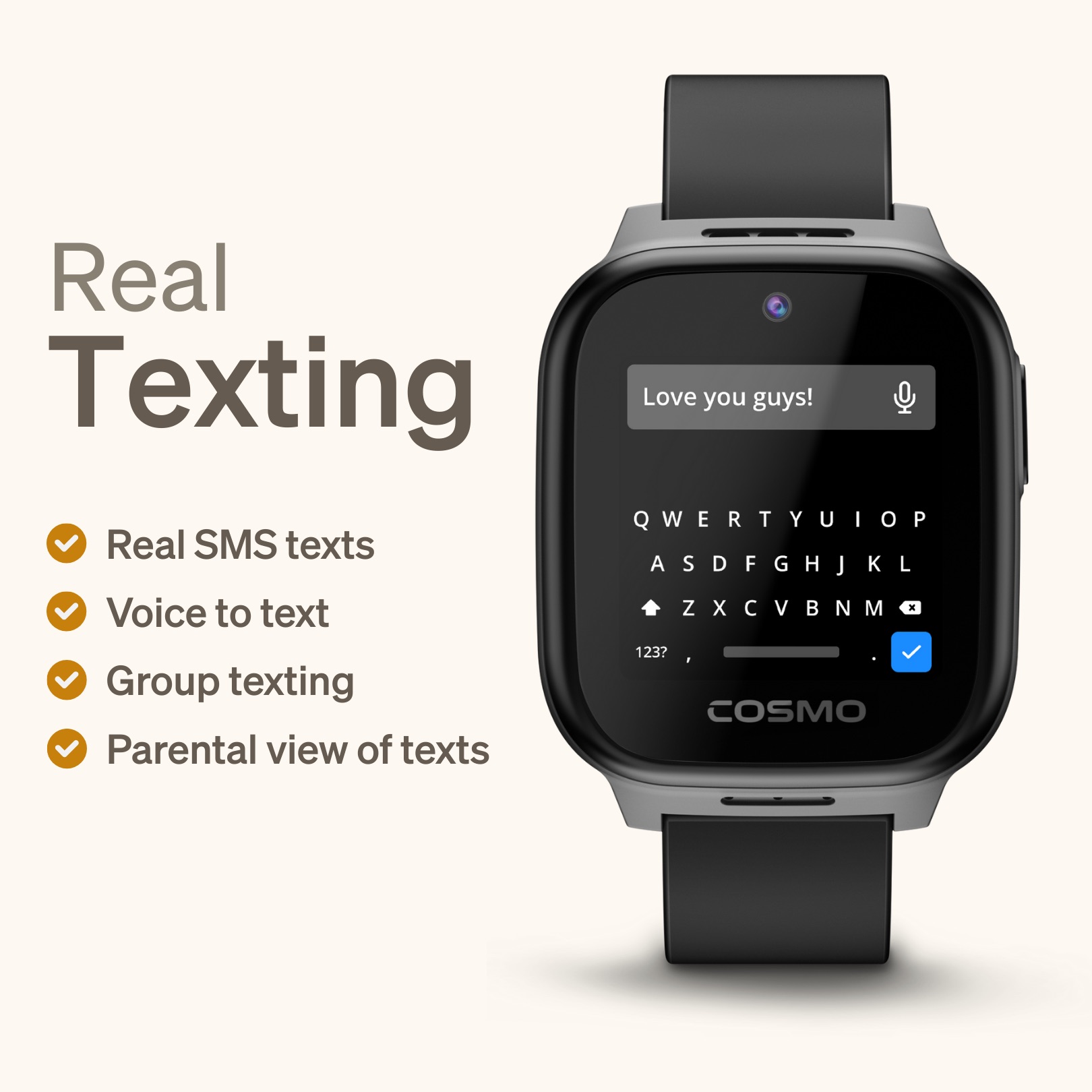
The JrTrack 5 supports voice calling, picture messaging, video messaging, and audio messaging through the COSMO app ecosystem. All contacts are parent-approved -- your child cannot communicate with anyone you have not explicitly added.
Voice calling works well. Call quality through the watch speaker was clear enough for conversations in moderately noisy environments. Our tester used it to call me after school and to check in during playdates. Calls connect through the Cosmo Mobile network (AT&T and US Cellular towers), and I experienced no dropped calls during testing in our suburban area.
Messaging includes picture, video, and audio messages. Our tester primarily used audio messages for quick updates, which is consistent with what I have seen on other watches -- kids prefer talking over typing, and the tiny screen makes text input impractical.
The 2MP camera is the weak point. Let me be direct: at 2 megapixels, the JrTrack 5 has the worst camera of any kids smartwatch that includes a camera. The TickTalk 4 offers 5MP front and 2MP side cameras. The Xplora X6Play has a 5MP front camera. The JrTrack 5's 2MP front-facing camera produces images that are recognizable but noticeably soft and grainy, even in good lighting conditions. Indoors, photos are borderline unusable.
Our tester took pictures anyway, because kids do not care about megapixel counts. But if your child wants to send photos to friends and family, the image quality will be noticeably worse than what their friends with competing watches are sending. This feels like a cost-cutting decision that COSMO should revisit in the next generation.
This is a unique feature that no other kids smartwatch offers. COSMO partnered with The Week Junior, a well-regarded current events publication for children, to deliver age-appropriate news content directly to the watch. Articles are short, written for kids, and cover topics from science and nature to sports and world events.
Is this a buying reason? Probably not on its own. But as a parent, I appreciated that our tester occasionally glanced at a news story instead of just playing with the camera. It is a small differentiator that reflects COSMO's attempt to position the JrTrack 5 as more than just a communication device. Whether your child will actually read news articles on a 1.4-inch watch screen depends entirely on the kid. Ours read a few during the first week and then mostly forgot the feature existed.
Here is where the COSMO JrTrack 5 math gets uncomfortable.
The watch itself is competitively priced at $149.99. But the Cosmo Mobile plan costs $17.99 per month with no contract, plus a one-time $12.99 activation fee. COSMO does offer prepaid options that bring the effective monthly cost down to around $9.99, but those require paying for multiple months upfront.
Total cost of ownership comparison:
| Timeframe | COSMO JrTrack 5 | TickTalk 5 | Garmin Bounce | Bark Watch |
|---|---|---|---|---|
| Watch | $149.99 | $159.99 | $149.99 | $169.00 |
| Activation | $12.99 | $0 | $0 | $0 |
| Year 1 Plan | $215.88 ($17.99/mo) | ~$119-$180 | $99.99-$119.88 | ~$60 ($5/mo) |
| Year 1 Total | $378.86 | ~$279-$340 | $249.98-$269.87 | ~$229 |
At $17.99 per month, the COSMO JrTrack 5 is the most expensive kids smartwatch to operate on a monthly basis among the major players. Over a year, you are paying nearly $380 all-in, compared to roughly $250-$270 for the Garmin Bounce. That $100+ annual difference is real money, and it compounds over the two to three years a child typically uses a smartwatch.
The prepaid option at approximately $9.99 per month brings the cost much closer to competitors, but it requires committing money upfront. For a detailed comparison of plan pricing across all major brands, our kids smartwatch monthly plans guide breaks down every option.
Coverage is a genuine strength, though. Cosmo Mobile runs on AT&T and US Cellular towers and covers the United States, Canada, and Mexico with a single plan. If your family travels across borders regularly, this is a meaningful advantage over watches that only cover the US. No roaming charges, no plan changes, no coverage gaps at the Canadian border.
Here is how the JrTrack 5 stacks up against the watches most parents compare it to.
| Feature | COSMO JrTrack 5 | TickTalk 5 | Garmin Bounce | Bark Watch |
|---|---|---|---|---|
| Price | $149.99 | $159.99 | $149.99 | $169.00 |
| GPS Accuracy | Excellent (HaloGPS, ~5 ft) | Good | Excellent (multi-GNSS) | Good |
| Battery Life | ~24 hours | 1-1.5 days | 1.5-2 days | ~24 hours |
| Water Resistance | IP68 | IPX7 | 5 ATM (swimproof) | IP68 |
| Camera | 2MP front | 5MP front + 2MP side | None | None |
| Voice Calls | Yes | Yes | No | Yes |
| Video Calls | No | Yes | No | No |
| Music | Spotify Kids | No | No | No |
| eSIM | Yes (FlexSIM) | No (nano SIM) | Yes (Garmin-managed) | Yes |
| Monthly Plan | $17.99/mo | ~$10-$15/mo | $9.99/mo | $5/mo |
| Best For | GPS accuracy + music | Video calling families | Active/outdoorsy kids | Budget monthly cost |
The pattern is clear: the JrTrack 5 wins on GPS accuracy and is the only option with music streaming. It loses on monthly cost, camera quality, and video calling. The Garmin Bounce remains the best value overall. The TickTalk 5 is the pick for families who want video calling. The Bark Watch offers the lowest ongoing cost.
The monthly plan is too expensive. At $17.99 per month, COSMO is charging a significant premium over every major competitor. The hardware price is fair at $150, but the recurring cost erodes that advantage quickly. The $12.99 activation fee adds insult to injury. If COSMO brought the monthly plan down to $12 to $13, the JrTrack 5 would be a much easier recommendation.
The 2MP camera is embarrassing in 2025. Every competitor that includes a camera offers at least 5MP. A 2MP sensor produces noticeably worse photos, and kids notice when their pictures look worse than their friends' pictures. This is the most obvious cost-cutting compromise on the watch.
The square display looks dated. This is partially subjective, but the square screen gives the JrTrack 5 a slightly older, more toy-like appearance compared to the round cases on Garmin and TickTalk watches. It does not affect functionality, but aesthetics matter to kids, especially kids on the older end of the 6-12 target range.
Spotify Kids requires a separate subscription. Advertising Spotify Kids integration is compelling, but the asterisk -- that it requires Spotify Family at $16.99 per month on top of everything else -- dampens the appeal. If you already have Spotify Family, this is not an issue. If you do not, the total monthly cost of running a JrTrack 5 with Spotify could exceed $35 per month.
No video calling. The TickTalk 5 offers video calling at a similar price point. The JrTrack 5 does not. For families who want face-to-face conversations with their kids, this is a meaningful gap.
The COSMO JrTrack 5 is the right choice if:
Consider alternatives if:
Rating: 8.0 / 10
The COSMO JrTrack 5 is a genuinely impressive kids smartwatch that leads the market in one critically important area: GPS accuracy. HaloGPS is not just marketing -- it delivers measurably better location tracking than anything else you can put on a kid's wrist. The Spotify Kids integration is a unique perk that kids genuinely enjoy, the eSIM setup is the smoothest in the business, and the cross-border coverage is a thoughtful touch for traveling families.
But the $17.99 monthly plan casts a long shadow over the entire package. In a market where competitors charge $5 to $10 per month for similar cellular service, COSMO is asking parents to pay a substantial premium that adds up to hundreds of extra dollars over the life of the watch. The underwhelming 2MP camera and lack of video calling further weaken the value proposition at that price point.
If GPS accuracy is your single most important criterion and you are willing to pay the ongoing premium for it, the JrTrack 5 delivers. If you want the best overall value in a premium kids smartwatch, the Garmin Bounce remains my top recommendation. And if video calling is what your family needs, the TickTalk 5 is the way to go. See where the COSMO JrTrack 5 ranks in our best kids smartwatches for 2026 roundup, or check our best GPS smartwatches for kids guide for the full breakdown.
Check the current price on Amazon
To compare pricing on the JrTrack 5 and every other watch we recommend, head to our deals page.
Yes, the COSMO JrTrack 5 requires a $17.99/month Cosmo Mobile plan (no contract) for GPS tracking, calling, messaging, Spotify Kids, and all connected features, plus a one-time $12.99 activation fee.
The JrTrack 5 requires an active Cosmo Mobile plan for all of its core features. Without the plan, the watch can only tell time. The standard plan is $17.99 per month with no contract, plus a one-time $12.99 activation fee. COSMO also offers prepaid options that bring the effective monthly cost down to approximately $9.99, but those require paying for multiple months upfront. For a full breakdown of plans across all major brands, see our kids smartwatch monthly plans comparison.
The JrTrack 5's HaloGPS is the most accurate GPS in any kids smartwatch -- consistently within 5-10 feet outdoors, compared to 10-25 feet for the Garmin Bounce and 15-45 feet for the TickTalk 4.
The HaloGPS system delivers the best GPS accuracy I have tested on any kids smartwatch. In open outdoor conditions, the watch was consistently accurate within 5 to 10 feet, compared to 10 to 25 feet for the Garmin Bounce and 15 to 45 feet for the TickTalk 4. The dedicated location chip also locks onto satellites roughly twice as fast as competitors. Indoors, where all GPS devices struggle, accuracy drops to 30 to 80 feet, which is comparable to other watches.
Yes, Spotify Kids requires a separate Spotify Family subscription ($16.99/month) on top of the COSMO plan -- bringing total monthly costs to nearly $35 if you do not already subscribe to Spotify Family.
Spotify Kids on the JrTrack 5 requires an active Spotify Family subscription, which is completely separate from the COSMO monthly plan. If your family already subscribes to Spotify Family, the JrTrack 5 integration costs nothing additional. If you do not have Spotify Family, adding it brings the total monthly cost of operating the JrTrack 5 to nearly $35 per month when combined with the Cosmo Mobile plan.
The JrTrack 5 is rated IP68 (submersion up to 1.5 meters), which handles rain, showers, and brief pool dips -- but it is not rated for lap swimming or extended water sessions.
The IP68 rating means it can handle submersion in up to 1.5 meters of water. This covers rain, showers, splashes, and brief dips in a pool. However, IP68 is not the same as a true swim rating. I would not recommend wearing the JrTrack 5 for lap swimming or extended pool sessions. If your child is a regular swimmer, the Garmin Bounce with its 5 ATM rating (safe to 50 meters) is the better choice.
No, the JrTrack 5 does not support live video calling. It has a 2MP camera for photos and recorded video messages, but no real-time video conversation feature.
The JrTrack 5 supports voice calls, picture messages, video messages, and audio messages, but not live video calling. The 2MP front-facing camera is used for taking photos and recording video messages, not for real-time video conversations. If video calling is a priority for your family, consider the TickTalk 5, which offers the best video calling experience in the kids smartwatch category.
Yes, the Cosmo Mobile plan covers the United States, Canada, and Mexico with no roaming charges -- but it does not work outside North America, and the eSIM cannot be swapped for a local SIM.
The seamless cross-border coverage is a genuine advantage for families who travel between these three countries. This is a genuine advantage for families who travel between these three countries. Coverage outside North America is not supported. The FlexSIM eSIM technology means you cannot swap in a local SIM card when traveling internationally -- you are limited to COSMO's coverage footprint.
Our hands-on Garmin Bounce 2 review covers the new voice calling, AMOLED display, battery life, and GPS accuracy. Is the $300 upgrade worth it for your family?
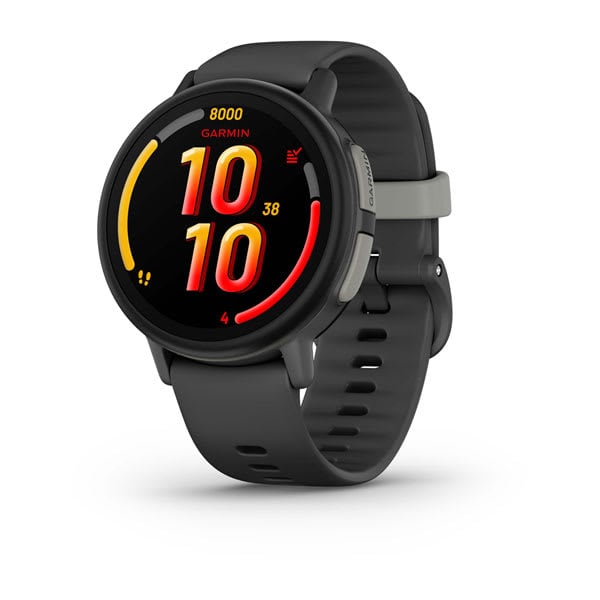
Our hands-on Garmin Bounce review covers GPS accuracy, battery life, durability, and whether this premium kids smartwatch is worth buying.

Our honest Gizmo Watch 3 review after real-world testing. GPS tracking, video calling, and 5MP camera -- but is the Verizon lock-in worth it? Full breakdown.

Our hands-on Bark Watch review covers AI content monitoring, GPS tracking, camera, battery life, and whether the $15/month plan is worth it for safety-focused families.

Our hands-on VTech KidiZoom DX3 review covers the dual cameras, games, activity tracking, and whether this $45 no-fee kids watch is worth it for your family.
New review alerts, deal drops, and seasonal buying guides — delivered weekly. No spam, unsubscribe anytime.
No spam. Unsubscribe anytime.