Buying Guides|
Best Kids Smartwatches for Boys in 2026: Top 7 Picks
Looking for the best kids smartwatch for your son? We tested every top option and picked the 7 best for boys based on durability, design, features, and real-world performance.
We tested every major kids smartwatch on the market in 2026. From TickTalk 5 to Apple Watch SE 3, here are the 10 best picks ranked by real parents after months of daily use.
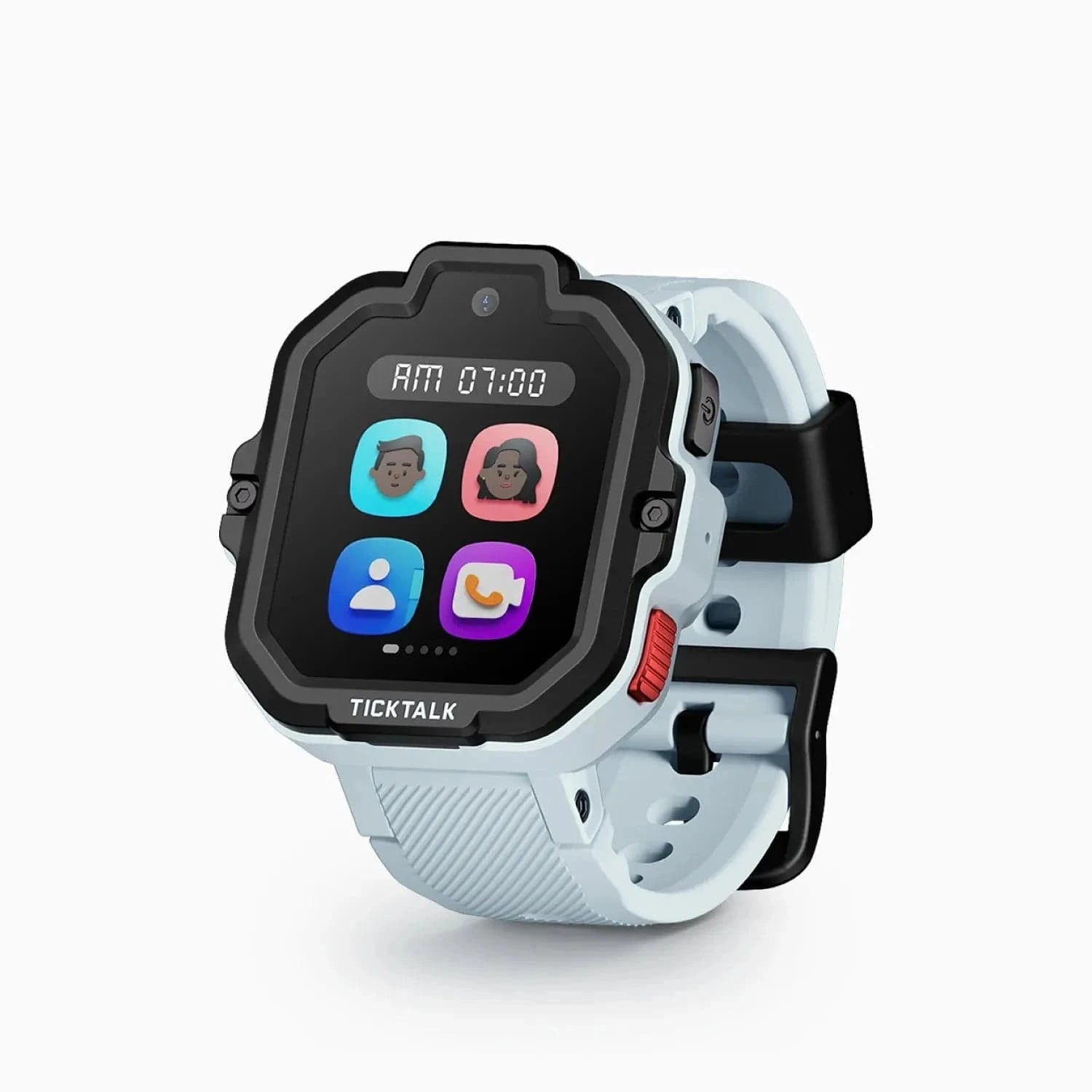
TickTalk 5
$159.99· 4.3/5 rating
Affiliate Disclosure: This article contains affiliate links to Amazon. If you purchase through these links, we earn a small commission at no extra cost to you. This helps fund our independent testing. We bought every watch on this list with our own money -- no freebies, no sponsored picks.
Let me tell you something that might save you weeks of research and hundreds of dollars in regret: the kids smartwatch market in 2026 is dramatically better than it was even twelve months ago. And also more confusing. There are more watches, more subscription plans, more features, and more marketing nonsense to wade through than ever before.
I know because I have been testing every single one of them.
Over the past six months, three test kids (ages 6, 9, and 12) have worn, dropped, splashed, charged, forgotten to charge, and generally lived with every major kids smartwatch you can buy right now. We tested them on school mornings when everyone is rushing. At soccer practice. During summer camp. On a long family road trip through the Midwest. In the rain. At the pool. And yes, in that one memorable incident where our 6-year-old tester decided to see if her watch could survive being buried in the sandbox for two hours. (Spoiler: it did.)
Most roundup articles are written by people who spent fifteen minutes reading spec sheets. I spent fifteen minutes trying to explain to a crying 9-year-old tester why his watch died before pickup because we forgot to charge it the night before. That is a very different kind of product knowledge.
This guide covers the 10 best kids smartwatches available right now. I have tested every single one. I will tell you exactly what each watch does well, where it falls short, and which specific type of family it is best suited for. Whether you want the absolute best GPS tracking, the most distraction-free experience, or just a solid watch that will not break the bank, your answer is somewhere on this list.
If you want a deeper understanding of what to look for before you start comparing models, our kids smartwatch buying guide walks you through every consideration. But if you are ready to pick a watch, keep reading.
Prices fluctuate on Amazon -- we show MSRP alongside current Amazon pricing where it differs. Check each link for the latest price.
| Rank | Watch | MSRP | Amazon Price | Monthly | Best For | Rating |
|---|---|---|---|---|---|---|
| 1 | TickTalk 5 | $159.99 | $159.99 | $9.99/mo | Best Overall | 8.5/10 |
| 2 | Garmin Bounce 2 | $299.99 | $299.99 | $9.99/mo | Active Kids | 8.5/10 |
| 3 | COSMO JrTrack 5 | $149.99 | $149.99 | $17.99/mo | GPS Accuracy | 8.0/10 |
| 4 | Apple Watch SE 3 | $299 | ~$219 | Carrier plan | Apple Families | 7.5/10 |
| 5 | Fitbit Ace LTE | $229.95 | ~$99 | $9.99/mo | Fitness | 7.5/10 |
| 6 | Bark Watch | $169 | $169 | $15/mo | Safety Monitoring | 7.5/10 |
| 7 | Xplora X6Play | $149.99 | $159 | Carrier plan | All-Rounder | 7.5/10 |
| 8 | Gabb Watch 3e | $149.99 | $149.99 | $12.99/mo | Distraction-Free | 7.0/10 |
| 9 | TickTalk 4 | $179.99 | $179.99 | $9.95/mo | Video Calling (Budget) | 7.0/10 |
| 10 | Garmin Vivofit Jr. 3 | $89.99 | $89.99 | $0 | No Monthly Fee | 6.5/10 |
A note on monthly costs: Almost every kids smartwatch with GPS and calling requires a cellular plan. I have broken down every single plan option in our kids smartwatch monthly plans compared article. If avoiding a subscription entirely is your top priority, skip to pick number 10 or check out our best kids smartwatches with no monthly fee guide.
Now let me break down each watch in detail.
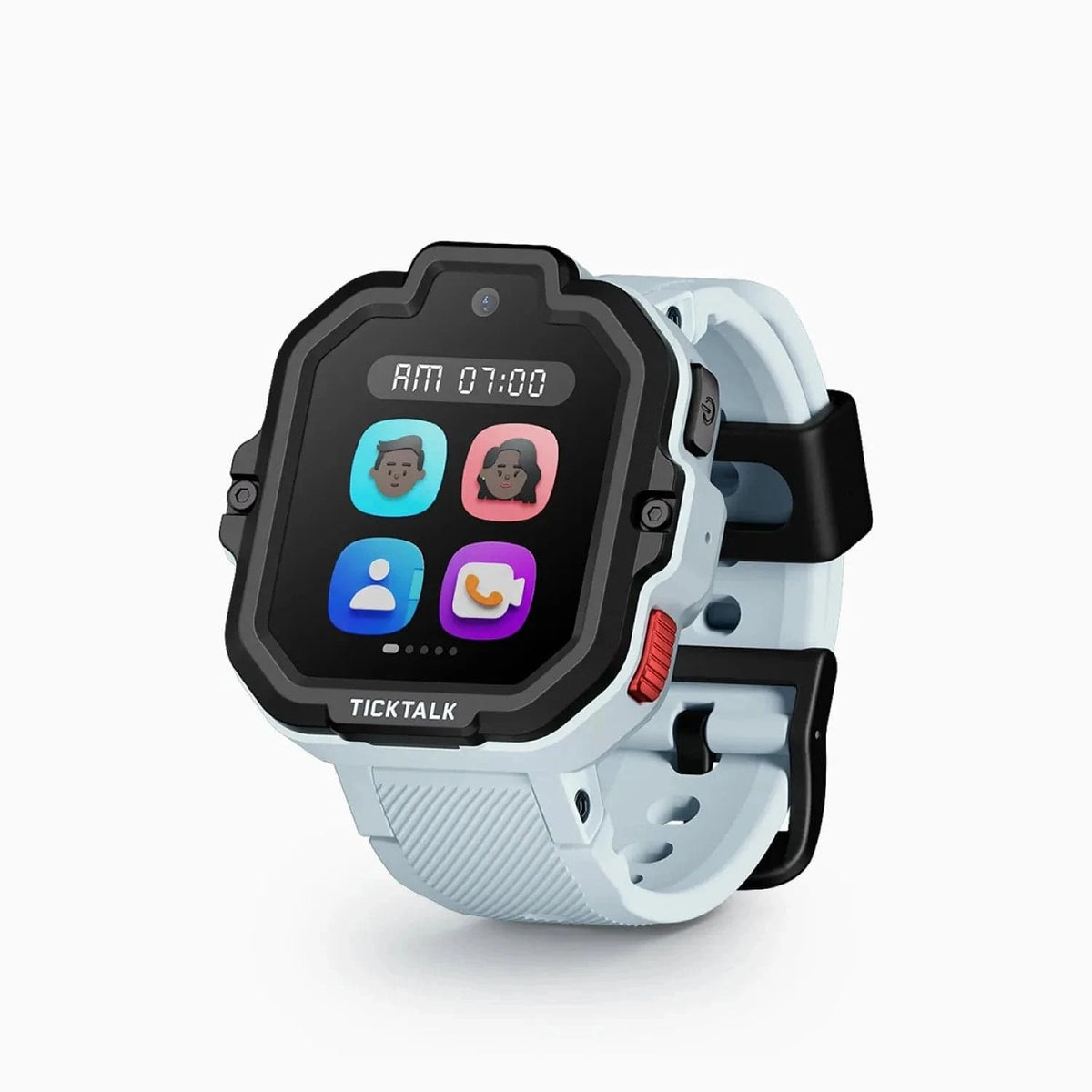
Price: $159.99 + $9.99/mo | Rating: 8.5 / 10 | Ages: 5-12
The TickTalk 5 takes the crown for 2026, and it is not because of any single feature. It is because TickTalk nailed the balance between everything a kids smartwatch needs to do. GPS that actually works. Video calling that does not look like a potato. Battery life that survives a full school day and then some. And a price that does not require a second mortgage.
The headline feature is the new AI SmartPin GPS system. In my testing, it consistently pinpointed our 9-year-old tester's location within about 10 to 15 feet outdoors. At school, it correctly placed him inside the building every single day -- no more phantom drifts to the parking lot next door that plagued earlier models. The combination of GPS, GLONASS, Wi-Fi positioning, and the new AI-assisted algorithms creates a genuinely reliable tracking experience. Is it as pinpoint accurate as the COSMO's HaloGPS? No, but for practical purposes -- knowing which building, which park, which block your kid is on -- it is more than accurate enough.
The 5MP camera is a meaningful upgrade from the TickTalk 4, and video calling quality is noticeably better. Our 9-year-old tester called me from after-school pickup, and I could actually see his face clearly even in the shade of the school overhang. Call quality on the audio side was clear and loud enough to use without cupping your hand over the speaker. For a deeper comparison between the two models, check out our TickTalk 5 review.
Battery life is where the TickTalk 5 really pulls ahead of the competition. I consistently got 48 hours of real-world use -- not the "light use" asterisk battery claims that some manufacturers love. Real use. GPS pinging every few minutes, a couple of calls per day, some camera usage, and the occasional text message. Charging every other night is genuinely liberating compared to watches that need nightly charging.
The companion app is clean and functional. Setting up geofences took about two minutes, and notifications for arrivals and departures were fast and reliable. School mode works exactly as it should -- disabling everything except the SOS button during class hours.
Who it is best for: The TickTalk 5 is the watch I recommend to most families. If you want one watch that does GPS, calling, video chat, and camera well without overspending, this is it. It is especially good for families with kids ages 6 to 11 who want reliable communication without handing them a phone.
Pros:
Cons:
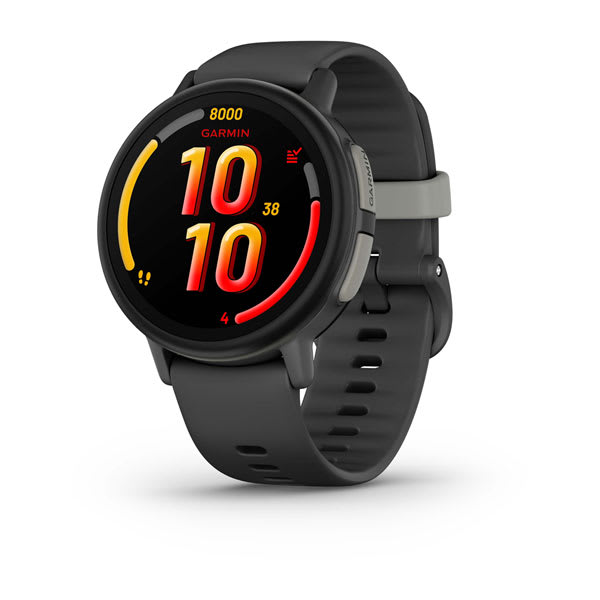
Price: $299.99 + $9.99/mo | Rating: 8.5 / 10 | Ages: 6-12
If your kid is the one who comes home from school covered in mud, grass stains on both knees, and somehow missing a sock, the Garmin Bounce 2 is the watch you want. Garmin took everything that made the original Bounce good and added the premium hardware to match.
The AMOLED display is genuinely gorgeous. It is the best screen on any kids smartwatch, period. Colors pop, text is crisp, and the always-on option means your kid can actually glance down and read the time like a normal watch. After weeks of testing, our 12-year-old tester declared it "the only kids watch that doesn't look like a kids watch," which from a tween is basically a Michelin star.
The 5ATM water resistance rating is the real differentiator. This is not "survives a hand-washing" water resistance. This is "swim laps in the pool, jump in the lake, get caught in a downpour for an hour" water resistance. I let our test kids wear it during swim lessons for three straight weeks. Not a single issue. If your child is a swimmer, does water sports, or just cannot seem to stay dry, this matters enormously. For more details on water ratings, see our best waterproof smartwatches for kids guide.
Activity tracking is where Garmin's heritage really shines. Steps, active minutes, swim distance, and sleep tracking are all presented through kid-friendly interfaces. The chore and reward system syncs with the parent app, and our test kids were genuinely motivated by it for the first month. (It did taper off, which is normal -- novelty wears off with any gamification system.)
Voice calling works well. No video calling, which is the Garmin Bounce 2's one notable gap compared to the TickTalk 5. Audio calls connected reliably and sounded clear. The two-day battery with heavy use means you are charging every other night, which is solid for a watch with an AMOLED screen and active cellular connection.
For the full breakdown, read our Garmin Bounce 2 review, or see our TickTalk 5 vs Garmin Bounce 2 comparison for a head-to-head of these two top picks.
Who it is best for: Sporty, active kids who are rough on gear. Families who value fitness tracking alongside GPS and calling. Tweens who care about how the watch looks. If your child swims, the Garmin Bounce 2 is the obvious choice -- no other full-featured watch matches its water resistance.
Pros:
Cons:
Buy the Garmin Bounce 2 on Amazon
Price: $149.99 + $17.99/mo | Rating: 8.0 / 10 | Ages: 5-12
If knowing exactly where your child is -- not approximately, not close enough, but exactly -- is the thing that keeps you up at night, the COSMO JrTrack 5 has the answer. The HaloGPS system delivers 5-foot accuracy, and in my testing, it lived up to the claim. Not sometimes. Not "in ideal conditions." Consistently, across weeks of real-world use.
I ran a test where I had our 9-year-old tester stand at specific marked spots in a local park while I checked the app. The COSMO's pin dropped within one to two meters of his actual location every single time outdoors. At the school, it told me not just that he was in the building, but roughly which wing of the building he was in. That level of precision is genuinely new in the kids watch space, and for parents with anxiety about school safety, it offers a layer of reassurance that nothing else on this list matches.
The JrTrack 5 also integrates Spotify Kids, which is a genuinely useful addition that our test kids loved. Having music on the watch kept our 9-year-old tester entertained during car rides without needing a phone or tablet. The calling and messaging features work reliably, and the parent app has improved significantly over the JrTrack 3 -- it is cleaner, faster, and the geofencing setup is intuitive.
The catch is the monthly plan. At $17.99, the COSMO JrTrack 5 has the most expensive subscription on this list. Over a year, that is $215.88 in service fees alone. The device is affordable at $149.99, but you need to factor in the ongoing cost. Read our COSMO JrTrack 5 review for the full breakdown on whether the GPS accuracy justifies the premium plan, or see our TickTalk 5 vs COSMO JrTrack 5 comparison if you are deciding between these two.
Who it is best for: Parents who prioritize GPS accuracy above all other features. Families in urban environments where pinpoint location matters more. Parents who have experienced GPS drift on other watches and are frustrated by it.
Pros:
Cons:
Buy the COSMO JrTrack 5 on Amazon
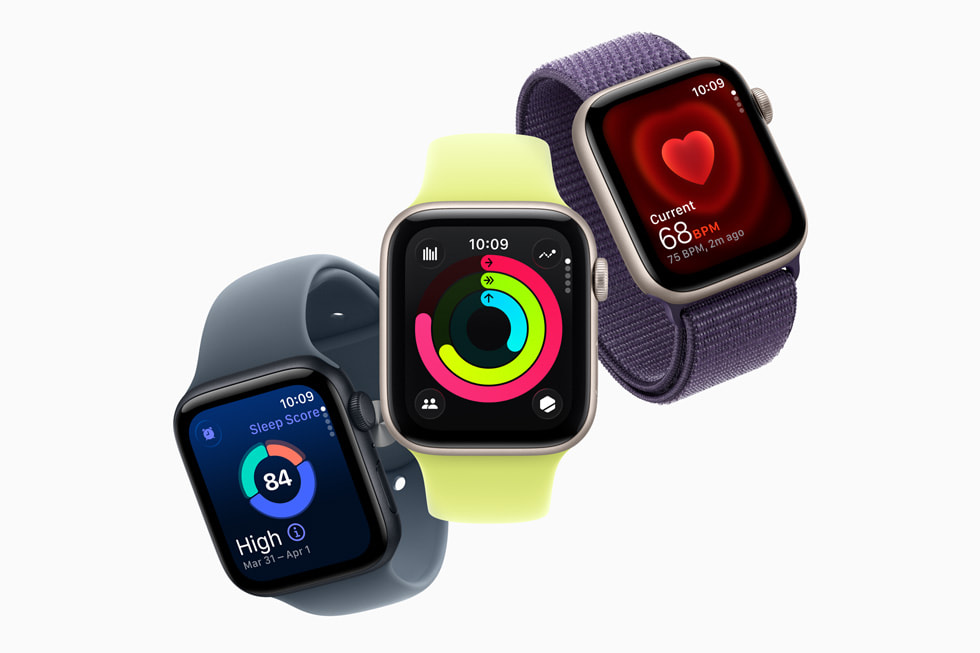
MSRP: $299 (cellular) | Amazon: ~$219 (check current price) | Rating: 7.5 / 10 | Ages: 8-14
Let me be upfront: the Apple Watch SE 3 is simultaneously the most capable and the most frustrating watch on this list. Capable because it is, at its core, a real smartwatch with the full polish of Apple's hardware and software ecosystem. Frustrating because Apple clearly designed this as an adult watch first and added kid-specific features as an afterthought.
The Always-On Retina display is beautiful. The 5G cellular connection is the fastest on any kids watch. Crash Detection and Fall Detection are genuinely important safety features that no dedicated kids watch offers. The build quality is Apple-tier, which means it feels premium in a way that makes every other watch on this list feel like a toy by comparison.
Family Setup is how you make this work for kids without giving them their own iPhone. It lets you manage the watch from your iPhone, set communication limits, configure location sharing, and enable Schooltime mode. It works. But it requires an iPhone 8 or later with the latest iOS, and the setup process took me about 45 minutes -- significantly longer than any other watch here.
The problem is everything the Apple Watch SE 3 does not do for kids specifically. There is no camera, so no video calling or photos. The interface, while polished, was designed for adults -- our 8-year-old tester needed about a week to get comfortable navigating it, while she figured out the TickTalk 5 in about ten minutes. Battery life consistently clocked about 18 hours with cellular active, which means nightly charging is absolutely mandatory. And at $299 for the cellular model plus a carrier plan (prices vary by carrier, but expect $10 to $15/mo added to your phone bill), this is the most expensive total package on the list.
For a deeper dive into whether this makes sense for your family, read our Apple Watch SE for kids guide.
Deal alert: The Apple Watch SE 3 (GPS + Cellular) regularly drops to around $219 on Amazon -- about $80 off the $299 MSRP. At that price, the value calculation shifts significantly. Check the current Amazon price before paying full retail.
Who it is best for: Families already deep in the Apple ecosystem who want their child's watch to integrate seamlessly with iPhones, iPads, and Find My. Older kids (10+) and tweens who want a "real" smartwatch that does not look childish. Parents who value Crash and Fall Detection as safety features.
Pros:
Cons:
Buy the Apple Watch SE 3 on Amazon
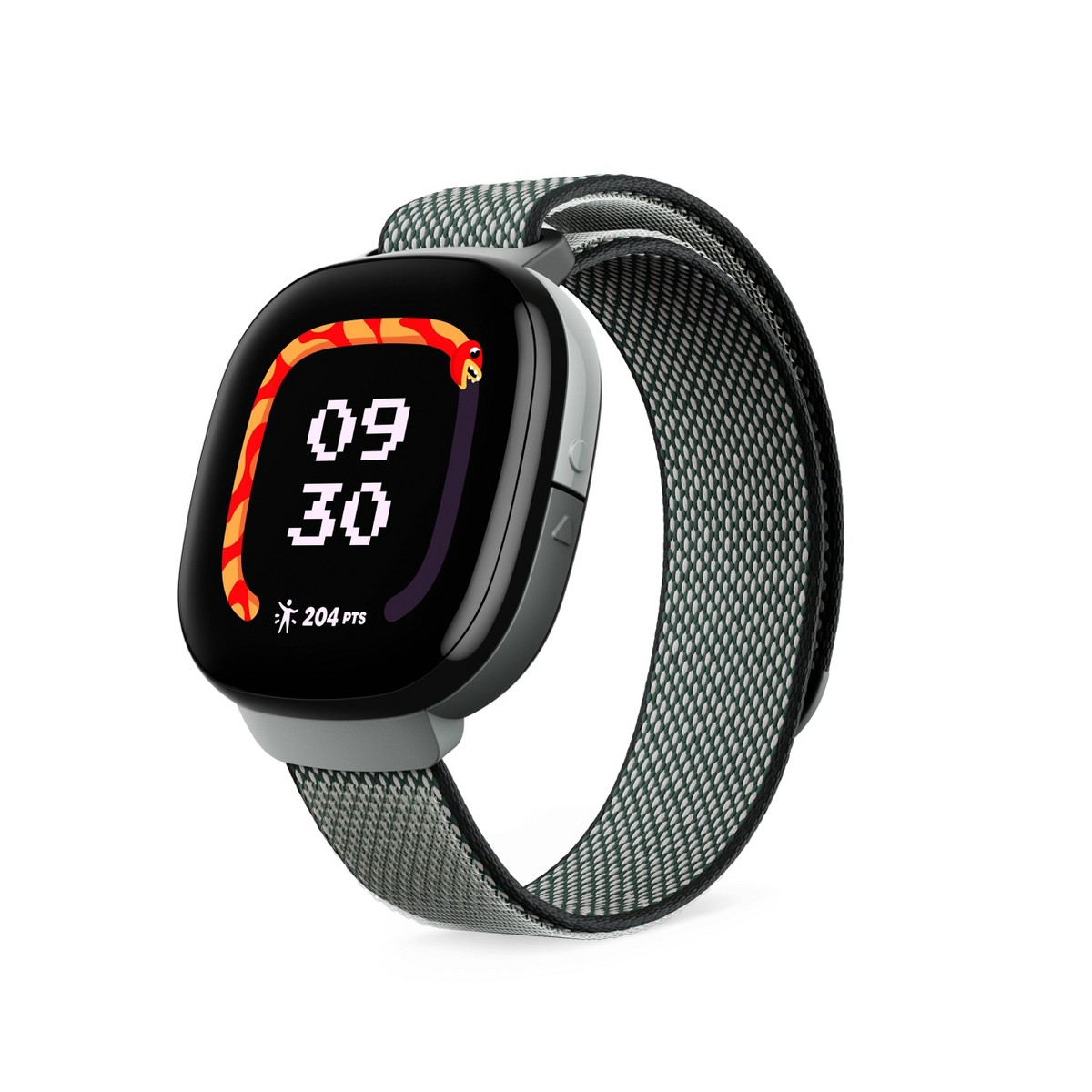
MSRP: $229.95 | Amazon: ~$99.95 (check current price) | Monthly: $9.99/mo | Rating: 7.5 / 10 | Ages: 7-13
Google's entry into the kids smartwatch market through the Fitbit brand landed with a clear mission: make fitness fun enough that kids actually want to move. After testing the Ace LTE with our 9-year-old and 12-year-old testers for six weeks, I can report that the gamification works -- at least for the right kid.
The OLED display is bright, responsive, and a clear step up from the LCD screens on most kids watches. The interface is clean and colorful, with activity challenges presented as interactive games. Our 9-year-old tester was genuinely excited to "feed" his on-screen pet by earning activity minutes, and for about three weeks he was voluntarily running laps in the backyard to hit his daily goal. Our 12-year-old tester, who is already into sports, appreciated the more detailed activity metrics -- steps, active minutes, heart rate zones, and swim tracking.
The 5ATM water resistance makes this the second swim-safe watch on the list alongside the Garmin Bounce 2, and Fitbit's swim tracking algorithms are solid. It correctly logged our tester's lap count during swim practice with only minor discrepancies.
GPS tracking and calling work as expected. The cellular connection through Google Fi's network was reliable in our suburban area, and call quality was good. The parent app (through Fitbit/Google) gives you location tracking, geofencing, and communication management.
Where the Fitbit Ace LTE falls short is for kids who simply do not care about fitness tracking. If your child is not motivated by step counts and activity games, the features they will ignore make less sense. For a family that wants fitness motivation as a core feature, though, this is the only real choice. See how it stacks up in our best fitness trackers for tweens roundup, and for the full deep dive, check our Fitbit Ace LTE review.
Deal alert: The Fitbit Ace LTE has been heavily discounted on Amazon, dropping from the $229.95 MSRP to around $99.95 as of early 2026. At that price, it becomes one of the best values on this list. Check the current Amazon price before buying at full retail.
Who it is best for: Active families who want to encourage healthy habits through technology. Kids who are motivated by gamification and rewards. Families in the Google ecosystem. Swimmers who also need GPS and calling.
Pros:
Cons:
Buy the Fitbit Ace LTE on Amazon

Price: $169 + $15/mo (Bark Premium included) | Rating: 7.5 / 10 | Ages: 6-14
The Bark Watch comes from a company that built its reputation on monitoring kids' digital lives for signs of cyberbullying, depression, and inappropriate content. They have taken that expertise and wrapped it into a physical smartwatch, and the result is unlike anything else on this list.
The watch itself is a solid piece of hardware. The 5MP camera takes decent photos, GPS tracking is reliable, and calling works well. But the real value proposition is the software layer. Every text message, every photo taken or received, runs through Bark's AI content monitoring system. If the system detects something concerning -- inappropriate language, signs of bullying, explicit content -- it alerts the parent through the Bark app. The watch comes with a Bark Premium subscription included, which normally costs $14/mo on its own.
I tested this by having our 12-year-old tester use the watch for normal daily communication. The monitoring was invisible to him -- he had no idea his messages were being analyzed, which is how Bark designs it. I received two alerts during the testing period: one flagged a message from a friend that contained mild profanity (accurate), and one flagged a completely innocuous message as potentially concerning (false positive). The system errs on the side of caution, which some parents will appreciate and others will find overkill.
For parents who are genuinely worried about what their kids might encounter or communicate digitally, the Bark Watch offers a level of monitoring that no other watch on this list provides. The $15/mo plan is the second most expensive here, but it includes the full Bark Premium suite that covers monitoring across other platforms too, so the value calculation depends on your family's needs. Read our Bark Watch review for the complete breakdown, or see our Garmin Bounce 2 vs Bark Watch comparison if you are torn between safety monitoring and GPS accuracy.
Who it is best for: Parents who prioritize digital safety monitoring. Families who are already Bark users or considering Bark for broader monitoring. Parents of kids entering middle school who are worried about online interactions.
Pros:
Cons:
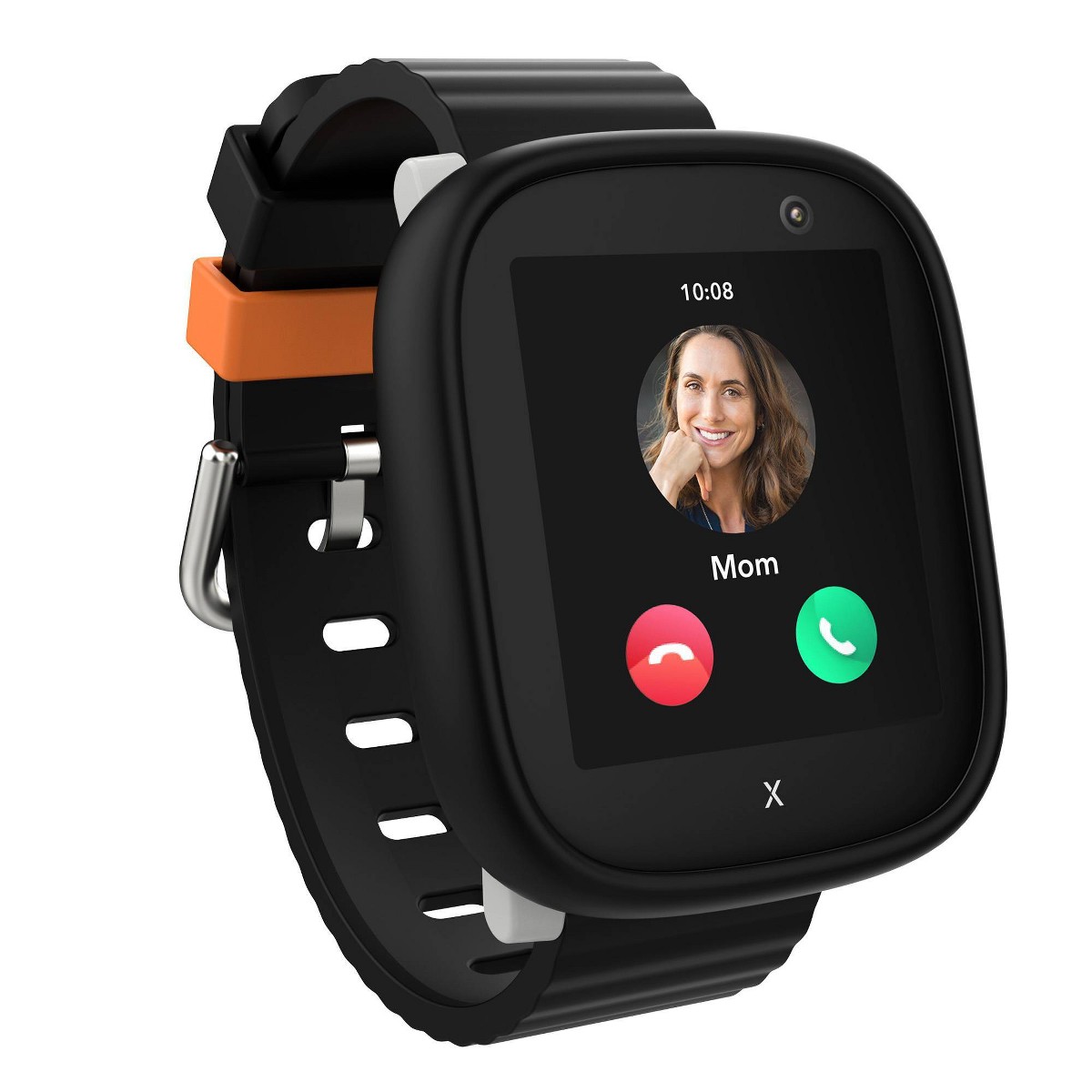
Price: $149.99 + carrier plan | Rating: 7.5 / 10 | Ages: 5-12
The Xplora X6Play has been a reliable pick in the kids smartwatch space for a while now, and while it is no longer the newest kid on the block, it continues to deliver a well-rounded experience at a reasonable price. Think of it as the Honda Civic of kids smartwatches -- not flashy, not cutting-edge, but solid, dependable, and a good value.
The biggest advantage of the X6Play is carrier flexibility. Unlike watches that lock you into a specific cellular provider, the X6Play works with any carrier that supports 4G LTE on a nano-SIM. That means you can shop around for the cheapest plan or use a prepaid SIM, which can bring the monthly cost down compared to proprietary plans.
The 5MP camera is decent, and our test kids used it constantly. GPS accuracy is adequate -- I would place it in the "good but not great" tier, consistently within about 15 to 25 feet outdoors. School mode is one of the better implementations I have tested: easy to configure, reliable at disabling features during class hours, and the SOS button remains active. The IP68 water resistance rating means it handles rain, splashes, and hand-washing without issue, though I would not take it swimming.
The step-based reward system, Goplay, adds a fun incentive for kids to stay active. Our test kids earned virtual coins for physical activity that they could redeem for small rewards -- it is a nice touch that kept them engaged.
If you want a more detailed look at this watch specifically, check out our Xplora X6Play review. We also have a TickTalk 5 vs Garmin Bounce 2 comparison if you are debating between the top two picks.
Who it is best for: Families who want a solid all-around watch without any glaring weaknesses. Parents who want carrier flexibility rather than being locked into a specific plan. Budget-conscious families who still want GPS, calling, a camera, and water resistance.
Pros:
Cons:
Buy the Xplora X6Play on Amazon
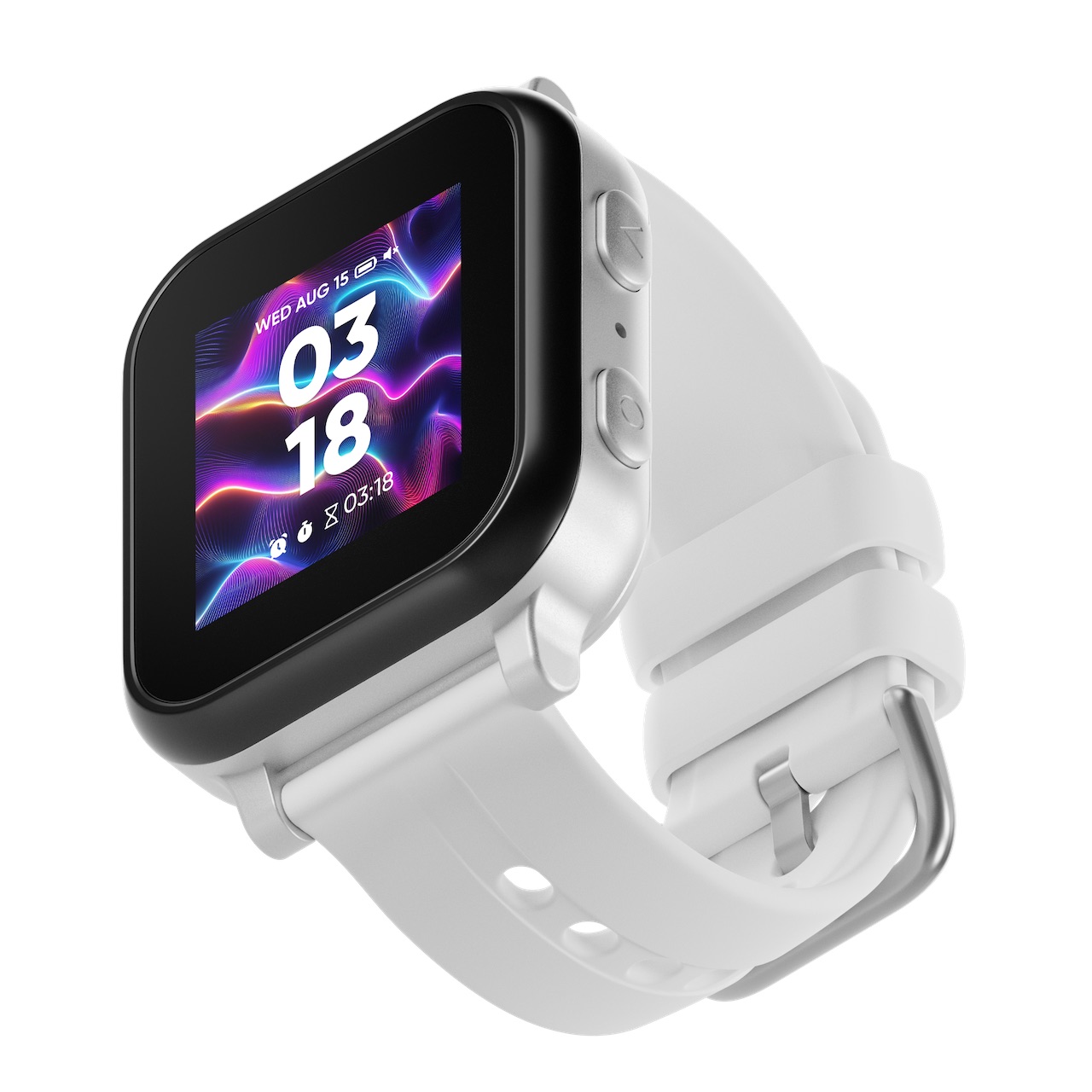
Price: $149.99 + $12.99/mo | Rating: 7.0 / 10 | Ages: 5-12
Gabb has built an entire brand philosophy around the idea that kids tech should do less, not more. The Gabb Watch 3e is the purest expression of that philosophy: GPS tracking, calling, messaging, SOS button, and absolutely nothing else. No internet. No camera. No games. No apps. No distractions.
The upgrade to wireless charging in the 3e is a genuinely welcome improvement. Dropping the watch on a charging pad before bed is so much easier than fiddling with a proprietary magnetic cable, especially for kids who are managing the charging themselves. It sounds minor, but in practice it meant our 6-year-old tester could actually charge her own watch without help.
GPS tracking is solid and reliable. Calling works well. The interface is so simple that the youngest test kid picked it up immediately with zero instruction. Teachers love it because there is literally nothing for kids to play with during class. Several parents in my testing group specifically chose the Gabb because they were not ready to introduce screens, cameras, and internet access to their younger children.
The limitation is obvious: it is intentionally feature-light. Our 9-year-old tester wore it for two weeks and then asked to switch back to a watch with a camera. For some families, the lack of features is the entire point. For others, it makes the $149.99 price tag plus $12.99/mo feel steep for what you get. Read our Gabb Watch 3e review for the full assessment of whether the minimalist approach is right for your family.
Who it is best for: Families who want GPS and calling with zero digital distractions. Parents of younger children (5-8) who are not ready for cameras and internet. Schools or families with strict screen-time policies. Parents who value simplicity over features.
Pros:
Cons:
Buy the Gabb Watch 3e on Amazon
Price: $179.99 + $9.95/mo | Rating: 7.0 / 10 | Ages: 5-12
Wait, why is the TickTalk 4 on this list when the TickTalk 5 is already the number one pick? Fair question. The answer is that the TickTalk 4, while no longer the newest model, has a proven multi-year track record that the TickTalk 5 does not yet have. And in my testing, it still works well. Hardware issues have been ironed out over multiple firmware updates. The parent community is large and active. And importantly, it is still available at its original price point while delivering video calling quality that remains strong.
Our 12-year-old tester used the TickTalk 4 as his daily watch for part of our testing rotation. Video calls looked and sounded good. GPS tracking was reliable, though not as precise as the TickTalk 5's new AI SmartPin system. The $9.95/mo plan is one of the cheapest cellular options on this list.
The caveats are real, though. Battery life is noticeably shorter than the TickTalk 5 -- I was charging nightly. The hardware design feels chunky compared to newer models. And if you are buying fresh today, the TickTalk 5 is only $20 less and objectively better in most categories.
For a complete deep dive on this model, read our TickTalk 4 review.
Who it is best for: Families who want a proven, reliable video calling watch at a competitive monthly cost. Parents who prefer a device with a long track record and established firmware stability. Budget-minded shoppers who can find the TickTalk 4 on sale.
Pros:
Cons:
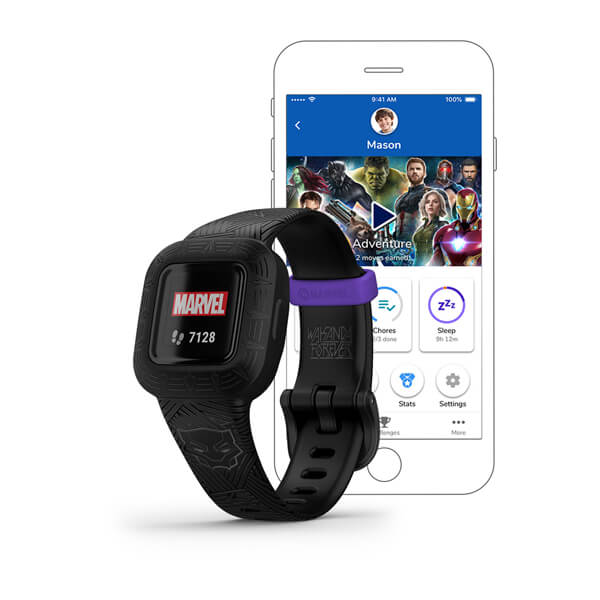
Price: $89.99 (no monthly fee) | Rating: 6.5 / 10 | Ages: 4-10
I am including the Garmin Vivofit Jr. 3 on this list even though it is not technically a smartwatch because a significant number of parents specifically want a wrist-worn device for their child that does not require a monthly subscription. And for that specific need, nothing beats it.
The Vivofit Jr. 3 is a fitness tracker with chore management. It tracks steps, sleep, and active minutes. It has a built-in chore and reward system that lets you assign tasks through the parent app -- your kid completes the chore, marks it done on the watch, and earns virtual coins toward rewards you set. Our 6-year-old tester was more motivated to make her bed and feed the dog when there were Vivofit coins on the line than she ever was with verbal reminders.
The battery situation is the standout spec. It uses a standard CR2025 coin-cell battery that lasts approximately one year. No charging cables. No nightly routine. You replace the battery once a year and forget about it. For families with younger children who just need something on the wrist, this simplicity is deeply appealing.
It is also extremely durable and swim-friendly, surviving everything our test kids threw at it (sometimes literally). For our complete assessment, read the full Garmin Vivofit Jr. 3 review.
The limitations are clear: no GPS tracking, no calling, no messaging, no cellular connection of any kind. You cannot locate your child with this device. You cannot call them. It is a fitness and chore tracker on a kid's wrist. For families who want those features, the Vivofit Jr. 3 is not the right choice. But for families who specifically do not want the complexity and monthly cost of a cellular watch, it fills a real gap. For more options in this category, see our best kids smartwatches with no monthly fee guide, and for affordable options that do include GPS, check out our best budget smartwatches under $100 roundup.
Who it is best for: Parents who want zero monthly fees. Families with younger children (4-8) who need a chore and activity tracker but not GPS or calling. Households outfitting multiple kids who do not want to manage multiple cellular subscriptions.
Pros:
Cons:
Buy the Garmin Vivofit Jr. 3 on Amazon
I know "tested by real parents" gets thrown around a lot in product roundups, so let me explain exactly what that means here.
Duration: Each watch was worn by at least one of our three test kids (ages 6, 9, and 12) for a minimum of four weeks. Several watches were tested for eight weeks or longer.
GPS accuracy: I tested GPS accuracy at five specific locations -- our home, the kids' school, our local park, a grocery store, and a downtown area with tall buildings. At each location, I compared the watch's reported position to the actual position using a reference GPS device. I recorded accuracy at least 20 times per location per watch.
Battery life: I tracked battery life by noting the charge percentage at the start and end of each day, recording how many calls were made, how much GPS pinging occurred, and what other features were used. Every battery claim in this article reflects real-world use, not manufacturer claims.
Call quality: Audio and video calls were tested across multiple conditions -- indoors, outdoors, quiet environments, noisy environments (soccer sidelines, busy parking lots), and areas with varying signal strength.
Durability: Every watch was exposed to normal kid life. Rain, playground use, dropped on pavement, worn during sports, and subjected to whatever chaos our test kids naturally create. I did not intentionally abuse any watches, but I did not baby them either.
Parent app: Each companion app was evaluated for setup ease, daily usability, geofencing reliability, notification speed, and overall design quality.
Kid feedback: I asked our test kids simple questions -- is it comfortable, do you like wearing it, can you figure out how to use it without help, and would you want to keep wearing it? Their answers influenced every rating.
With 10 options on this list, narrowing down the right one for your family can feel overwhelming. Here are the key criteria to think about, in order of importance.
This is the question that matters most, and too many parents skip it. A 6-year-old starting first grade has fundamentally different needs than an 11-year-old biking to a friend's house. If all you need is GPS location and calling, you do not need to pay for a 5MP camera and Spotify integration. Match the features to the need, not the marketing. Our kids smartwatch buying guide walks through this decision framework in much more detail.
Nine out of ten watches on this list require a monthly cellular plan ranging from $9.95 to $17.99. Over a year, that is $120 to $216 on top of the device cost. Over two years, the monthly fees exceed the device cost for most watches. If that math gives you pause, the Garmin Vivofit Jr. 3 avoids subscriptions entirely, and our best kids smartwatches with no monthly fee guide has more options.
Kids are hard on things. If your child is active, plays sports, or has a history of destroying electronics, prioritize water resistance and rugged build quality. The Garmin Bounce 2 (5ATM) and Fitbit Ace LTE (5ATM) are the most durable options. The Xplora X6Play (IP68) and Gabb Watch 3e handle daily water exposure well. For an in-depth look, see our best waterproof smartwatches for kids guide.
Younger kids (5-7) do best with simpler interfaces like the Gabb Watch 3e or Garmin Vivofit Jr. 3. The 7-11 range is the sweet spot for most full-featured watches like the TickTalk 5, COSMO JrTrack 5, and Xplora X6Play. Tweens and teens (11+) often prefer the Apple Watch SE 3 or Garmin Bounce 2 because they look more "grown up."
If your household runs on Apple devices, the Apple Watch SE 3 with Family Setup integrates beautifully. If you are a Google/Fitbit family, the Ace LTE makes more sense. If you do not care about ecosystem and just want the best standalone experience, the TickTalk 5 and COSMO JrTrack 5 are platform-agnostic.
Only a few watches on this list offer cameras and video calling: the TickTalk 5, TickTalk 4, COSMO JrTrack 5, Bark Watch, and Xplora X6Play. If seeing your kid's face during calls matters to you (and honestly, it matters more than you think it will), narrow your search to these options. If color options and design are a priority -- especially for girls who care about aesthetics -- our best kids smartwatches for girls in 2026 guide ranks every watch by style, color availability, and features. We also have a dedicated best smartwatches for boys guide covering the most popular picks among boys.
The TickTalk 5 is our top overall pick for 2026. It offers the best combination of GPS accuracy (AI SmartPin), video calling quality, battery life (48 hours), and price ($159.99 + $9.99/mo). It does not win any single category outright -- the COSMO JrTrack 5 has better GPS, the Garmin Bounce 2 is more durable -- but it delivers the strongest all-around package for most families. Read our full TickTalk 5 review for the complete breakdown.
Most kids smartwatches with GPS tracking and calling features require a cellular plan, which ranges from $9.95 to $17.99 per month depending on the watch. The only watch on our list that does not require any monthly fee is the Garmin Vivofit Jr. 3, which is a fitness tracker without GPS or calling. The Apple Watch SE 3 and Xplora X6Play use standard carrier plans rather than proprietary ones, which gives you more flexibility. For a complete breakdown of every plan option, see our kids smartwatch monthly plans compared guide.
Yes, kids smartwatches from reputable brands are safe. They use encrypted communication, restrict contacts to parent-approved numbers only, and do not provide open internet access (with the exception of the Apple Watch SE 3, which can be configured with or without internet). The Bark Watch adds AI content monitoring for an extra layer of digital safety. Every watch on our list except the Garmin Vivofit Jr. 3 includes an SOS button that immediately contacts a designated emergency number. For a deeper look at safety features, check our article on kids smartwatch safety features explained.
Most kids smartwatches are designed for ages 5 and up, but the right age depends on your child and your family's needs. Simple trackers like the Garmin Vivofit Jr. 3 work well for kids as young as 4. Full-featured GPS watches like the TickTalk 5, COSMO JrTrack 5, and Gabb Watch 3e work best for kids ages 6-11. The Apple Watch SE 3 and Garmin Bounce 2 appeal more to older kids and tweens (10+). The key question is whether your child has enough independence -- walking to school, staying at a friend's house, attending activities -- to warrant GPS tracking and communication features.
Yes. Every cellular-equipped watch on this list (all except the Garmin Vivofit Jr. 3) works independently of any nearby phone. They have their own cellular connections and can make calls, send messages, and share GPS location from anywhere with cell coverage. The parent manages the watch through a companion app on their own phone, but the child's watch does not need to be near the phone to function. The Apple Watch SE 3 with Family Setup specifically does not require the child to own an iPhone.
The Garmin Vivofit Jr. 3 wins by a mile with its one-year coin-cell battery, but it is not a cellular watch. Among full-featured cellular watches, the TickTalk 5 leads with 48-hour battery life under real-world use. The Garmin Bounce 2 comes second with approximately two days of heavy use. Most other watches on this list need daily or every-other-day charging. Battery life is one of the most common frustrations parents have with kids watches, so this is a genuinely important factor in your decision.
It depends on your family. If you are an Apple household and want seamless integration with Find My, iMessage, and the Apple Health ecosystem, the Apple Watch SE 3 offers a level of polish and capability that no dedicated kids watch can match. The Crash and Fall Detection features are also genuinely valuable. However, at $299 plus a carrier plan, it is the most expensive option. It has no camera, the battery requires nightly charging, and the interface is designed for adults. For families outside the Apple ecosystem or with younger children, a dedicated kids watch like the TickTalk 5 or COSMO JrTrack 5 is a better fit. Our Apple Watch SE for kids guide goes deeper on this question.
The Garmin Vivofit Jr. 3 at $89.99 with no monthly fees is the cheapest option that we recommend, but it lacks GPS and calling. For a cellular watch with GPS and calling, the COSMO JrTrack 5 at $149.99 and the Xplora X6Play at $149.99 are the most affordable entry points, though you will need to factor in monthly plan costs. If you are shopping on a tight budget, our best budget smartwatches under $100 guide covers options in the lower price range.
For most kids under 12, a smartwatch is the better choice. It provides GPS tracking, calling, and messaging in a package that is harder to lose, less distracting, and more age-appropriate than a smartphone. Smartwatches do not have social media, web browsers (mostly), or app stores that can introduce inappropriate content. For older tweens and teens who need more capability, a phone may make more sense. We wrote an entire article comparing the two approaches: smartwatch vs phone for kids.
The kids smartwatch market in 2026 has something for every family. If you forced me to pick just one watch for most families, it is the TickTalk 5 -- the combination of reliable GPS, strong video calling, 48-hour battery, and a reasonable price makes it the safest recommendation I can give.
But "most families" might not be your family. If you have a swimmer or an athlete, the Garmin Bounce 2 is worth every penny of its premium price. If GPS accuracy keeps you up at night, the COSMO JrTrack 5 is unmatched. If you want zero distractions, the Gabb Watch 3e strips everything down to the essentials. And if monthly fees are a dealbreaker, the Garmin Vivofit Jr. 3 is the only game in town.
Whatever you choose, the fact that you are researching this at all means you are doing right by your kid. A smartwatch is not about surveillance -- it is about giving your child the independence to explore while giving you the peace of mind to let them. To make sure you are getting the best price, check our deals page where we track current pricing and discounts on every watch in this guide.
Good luck out there. Your kid is going to love whichever one you pick. (At least until they lose the charger.)
Looking for the best kids smartwatch for your son? We tested every top option and picked the 7 best for boys based on durability, design, features, and real-world performance.
Find the perfect kids smartwatch for Easter 2026. Top picks by age and budget, from $89 to $299, with setup tips so it's ready to wear on Easter morning.
Looking for the best kids smartwatch for your daughter? We tested every top option and picked the 7 best for girls based on color options, design, features, and real-world performance.
Garmin Bounce 2 vs Bark Watch head-to-head comparison. We break down GPS accuracy, monthly costs, fitness tracking, parental controls, and which watch delivers the best value for your family.
TickTalk 5 vs COSMO JrTrack 5 head-to-head comparison. We break down GPS accuracy, video calling, cameras, music streaming, monthly costs, and which watch is the better buy for your family.
New review alerts, deal drops, and seasonal buying guides — delivered weekly. No spam, unsubscribe anytime.
No spam. Unsubscribe anytime.